
Heating & Cooling · Boilers
Dependable Heating. Lasting Comfort.
Explore modern boiler systems designed to deliver reliable home heating through radiators, baseboards, or radiant floor systems. Discover high-efficiency options and find the right solution for your home.
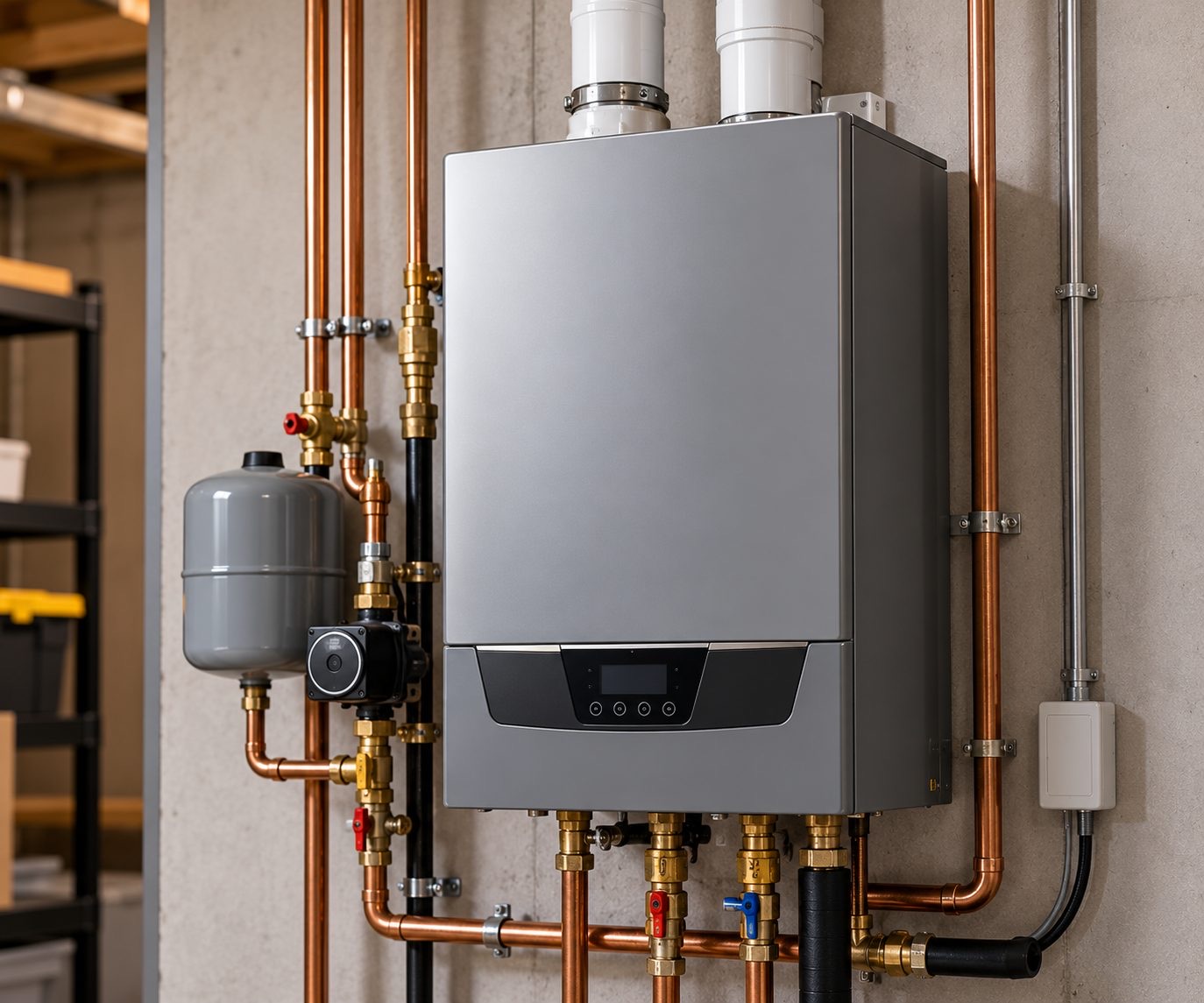
How it works
What is a boiler?
A boiler heats water and circulates it through a hydronic heating system: radiators, hydronic baseboard heaters, or radiant floor loops. They release the heat into each room, and cooler water returns to be heated again.
This is different from a forced-air furnace, which heats air and blows it through ducts. Most conventional boilers do not provide air conditioning.
- The boiler heats water, usually with natural gas, oil, propane or electricity.
- A circulator pump sends it through pipes to radiators, baseboards or floor loops.
- They release the heat into each room.
- Cooler water returns to the boiler to be heated again.
Why hydronic
Benefits of modern boilers
Consistent heating
Hydronic systems can provide comfortable, steady heat.
High-efficiency options
Modern condensing boilers can use less fuel than older equipment.
Quiet operation
Heat moves through water, without the airflow noise of forced air.
Radiant comfort
Compatible systems deliver heat through floors, radiators or baseboards.
Flexible configurations
Different boiler designs suit different residential hydronic systems, though not every boiler suits every system.
Boiler types
Types of residential boilers
Conventional (non-condensing)
Burns fuel to heat water and sends the hot exhaust out of the flue. Simple and long-proven, but more heat is lost up the vent.
High-efficiency condensing
Captures extra heat by cooling its exhaust until water vapour condenses. It does this best when the water returning from the system is cool, so efficiency depends on system design.
Combination (combi)
Heats your home and also heats tap water on demand. How much hot water it can supply depends on the model and your household’s needs.
System boiler
Has key hydronic parts, such as the circulator and expansion vessel, built in. Often paired with a separate indirect hot water tank. Configurations vary by manufacturer.
| Compare | Conventional | Condensing | Combi | System |
|---|---|---|---|---|
| Heating | Yes | Yes | Yes | Yes |
| Domestic hot water | With a separate indirect tank | With a separate indirect tank | Built in, on demand | With a separate indirect tank |
| Efficiency | Lower; more heat lost to exhaust | Highest, when return water is cool enough | Usually condensing | Usually condensing |
| Installation | Chimney or flue venting | Plastic venting and a condensate drain | Compact; gas line and water flow must suit hot water demand | Compact; fewer separate components |
| Typical applications | Replacing a like-for-like older system | Radiant floors and many radiator or baseboard systems | Smaller homes with moderate hot water use | Homes wanting stored hot water from the boiler |
Efficiency
Understanding boiler efficiency
Boiler efficiency is usually rated as AFUE: the share of the fuel’s energy that becomes heat for the home over a typical year. Older conventional boilers lose more heat up the flue. Condensing boilers recover extra heat from their exhaust and carry the highest ratings.
Ratings come from standard test conditions. Real efficiency depends on the water temperatures your system runs at, how it is set up, and how it is operated. A condensing boiler on hot-running radiators may not reach its rating.
- 75% AFUE Older conventional boiler133 units
- 85% AFUE Newer non-condensing boiler118 units
- 95% AFUE Condensing boiler105 units
The gain is largest when replacing an older conventional boiler, and depends on how cool the system’s return water runs.
Running costs
What could a new boiler save?
Space heating and hot water are shown separately, and hot water only counts when both boilers make it.
A condensing boiler reaches its rating when the water returning to it is cool, as with radiant floors. With hot-running baseboards it may do less well; you can set an exact figure below.
Adjust the assumptions
Enter your yearly fuel cost, use, or heat demand to see an estimate.
Incentives
Explore available heating incentives
Not every high-efficiency boiler qualifies for an incentive. Check what is listed for your province.
Answer a few questions to see which programs you may qualify for. You do not need to give us any contact details.
Compare
Boiler or furnace: what’s the difference?
Switching from one type to the other usually means major changes to the home’s heating infrastructure.
| Compare | Boiler | Furnace |
|---|---|---|
| How it heats | Heats water (hydronic) | Heats air (forced air) |
| Distribution | Pipes to radiators, baseboards or radiant floors | Ductwork to vents |
| Feel of the heat | Steady, radiant warmth | Faster response; air moves through the home |
| Cooling | Not by itself; needs a separate system such as ductless heat pumps | Can share ducts with central AC or a heat pump |
| Installation | Venting, piping, circulators and safety controls | Venting, ductwork connections and gas line |
| Maintenance | Annual service, plus checks on pressure, pumps and expansion tank | Annual service and regular filter changes |
| Replacing with the other type | Switching to forced air means adding ductwork | Switching to hydronic means adding piping and emitters |
Repair or replace
Is it time to replace your boiler?
Many of these can be repaired. A professional evaluation tells you whether repair or replacement makes more sense.
Frequent repairs
Repeated service calls, especially for the same problem.
Reduced heating performance
Rooms take longer to warm up than they used to.
Uneven heating
Some radiators or zones run cool.
Unusual noises
Banging, kettling or gurgling from the boiler or pipes.
Visible leaks
Water or corrosion around the boiler, valves or fittings.
Rising fuel use
Bills climbing without a change in weather or habits.
Reliability concerns
Worry about the boiler getting through another winter.
Aging equipment
Older boilers are more likely to need major repairs, though age alone does not mean replacement is needed.
Choosing a boiler
Choosing the right boiler
Size it to the home’s heating requirements, not to the old boiler’s capacity.
Heat-loss calculation
Size comes from how much heat the home actually loses, not from matching the old boiler, which may have been oversized.
Existing distribution
Radiators, baseboards or floors decide the water temperatures the system needs.
Water temperature
Lower operating temperatures let a condensing boiler condense more of the season.
Venting
Condensing boilers vent through plastic pipe and need a condensate drain; older chimneys may need changes.
Fuel availability
Natural gas, oil, propane or electricity at the home.
Condensing compatibility
Whether the existing system can run cool enough to benefit.
Circulators and piping
Pump sizing and piping layout, including any zones.
Expansion tank
Must suit the system’s water volume and pressure.
Hot water needs
Whether you want a combi, an indirect tank, or a separate water heater.
Installation codes
Venting, gas, electrical and safety-control requirements must all be met.
How we work
The Nexhome boiler installation process
Every installation needs proper hydronic design, venting, safety controls and commissioning.
Home and hydronic-system assessment
We look at the boiler, piping, emitters, venting and your hot water needs.
Equipment recommendation
We explain suitable boilers, efficiency levels and the installation scope.
Professional installation and commissioning
Qualified installers complete the work, including venting, safety controls and system set-up, to the applicable codes.
System walkthrough and support
We explain how the system works, how to maintain it, and the warranty and support information that applies.
Reliable Heating With Flexible Payment Options.
Explore financing options that may help make your boiler replacement more manageable.
Questions
Frequently asked questions
How long does a residential boiler typically last?
Many boilers last 15 years or more. Lifespan depends on the type, water quality, how well it was installed and how well it is maintained.
What is a high-efficiency condensing boiler?
A boiler that captures extra heat by cooling its exhaust until the water vapour in it condenses. It reaches its highest efficiency when the water returning from the heating system is relatively cool.
What is the difference between a boiler and a furnace?
A boiler heats water and circulates it through pipes to radiators, baseboards or floors. A furnace heats air and blows it through ducts. See the comparison above.
Can a boiler heat domestic hot water?
Yes, either with a separate indirect hot water tank heated by the boiler, or with a combination boiler that heats tap water on demand.
What is a combi boiler?
A combination boiler provides both space heating and on-demand hot water from one unit. Whether it suits you depends on the model and how much hot water your household uses at once.
Can I keep my existing radiators?
Usually, if they are in good condition. They are checked during the assessment, and the system is often flushed when a new boiler goes in.
Can a new boiler work with radiant floor heating?
Yes. Radiant floors run at low water temperatures, which suits condensing boilers well. The right controls and mixing are needed.
How much does a boiler cost to operate?
It depends on your fuel and its price, the boiler’s efficiency, your home’s heat loss and whether it also heats your water. The calculator above estimates it for your home.
Are government rebates available for boilers?
Very few programs currently pay for a boiler on its own. The checker above shows what is listed for your province.
How often should a boiler be serviced?
Most manufacturers recommend a professional service once a year, ideally before the heating season.
Should I repair or replace my boiler?
It depends on its age and condition, the repair cost, how reliable it has been, and whether leaks or corrosion are involved. An assessment gives you the facts, and a repair is sometimes the better choice.
Can a boiler provide air conditioning?
No. A boiler only heats. Homes with boilers often add cooling with ductless heat pumps, which need no ducts.
Let’s Find the Right Boiler for Your Home.
Whether you’re replacing an aging boiler or exploring a more efficient hydronic heating solution, Nexhome can help you understand your options.