ProductsHeating & CoolingWater HeatingWater TreatmentIndoor Air QualityHome Energy & ElectricalInsulation & Air Sealing
RebatesFinancingService & SupportWhy NexhomeAbout Us1-888-770-7179Get My Options

Home Energy & Electrical

Power Your Home. Protect Your Comfort. Take Control.

Your home’s energy needs are changing. From dependable backup power and solar to EV charging, electrical upgrades and intelligent energy management, Nexhome helps you explore solutions designed for a more connected, capable home.

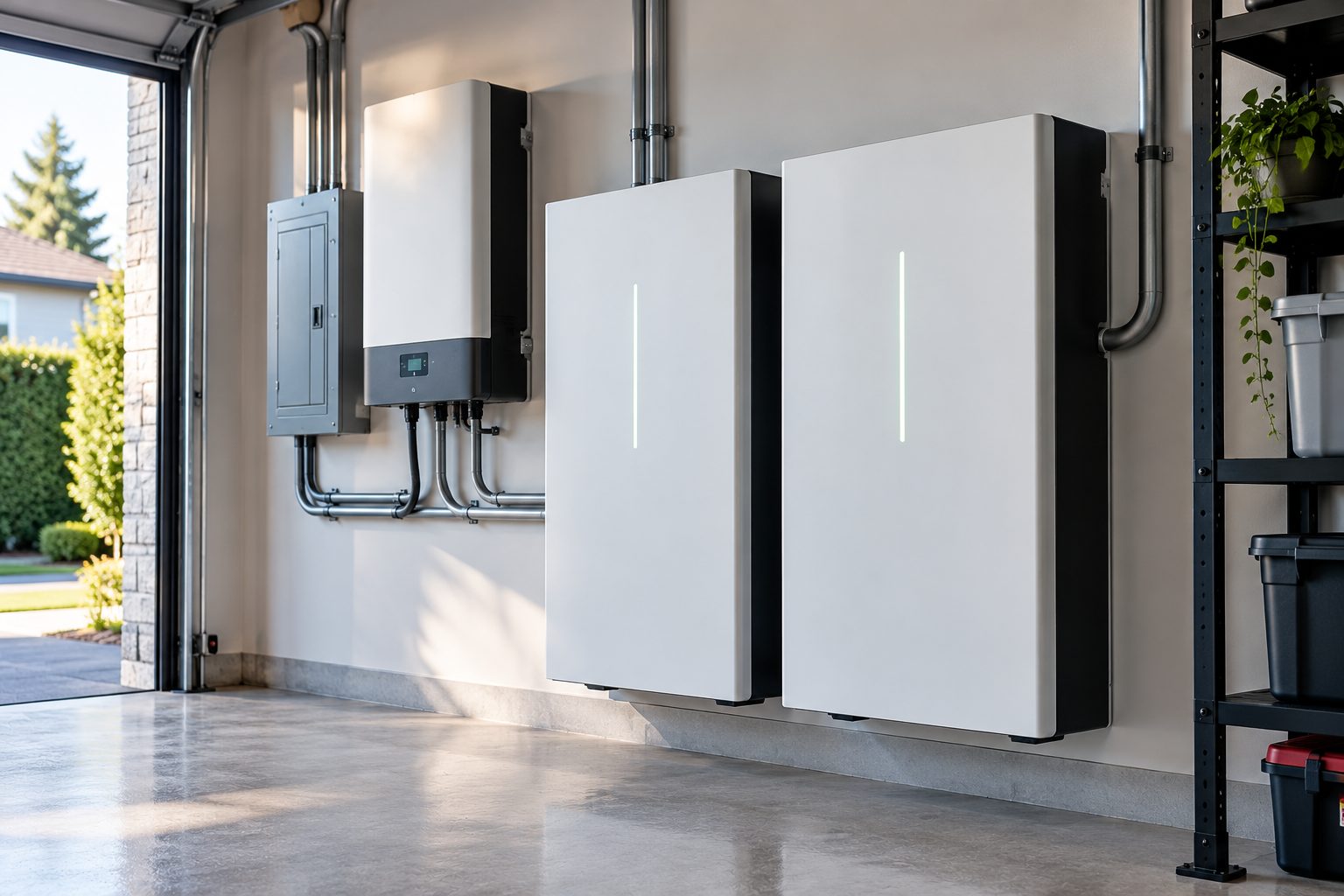
Two wall-mounted home batteries beside an inverter and electrical panel in a bright garage

Solutions

Smarter energy starts at home.

Whether you’re preparing for outages, going solar, charging an electric vehicle at home, upgrading your electrical system, or wanting more insight into your energy use, Nexhome can help you understand your options.

Two wall-mounted home batteries beside an inverter and electrical panel in a bright garage

Home Battery Storage

Power When It Matters Most.

A home battery stores electricity for use when it’s needed. With a properly designed backup system, selected circuits and appliances can stay powered during an outage, depending on battery capacity and electrical load.

  • Backup for selected essential circuits
  • Compatible solar integration options
  • Expandable storage where supported
  • More flexibility in home energy planning
Explore Battery Storage
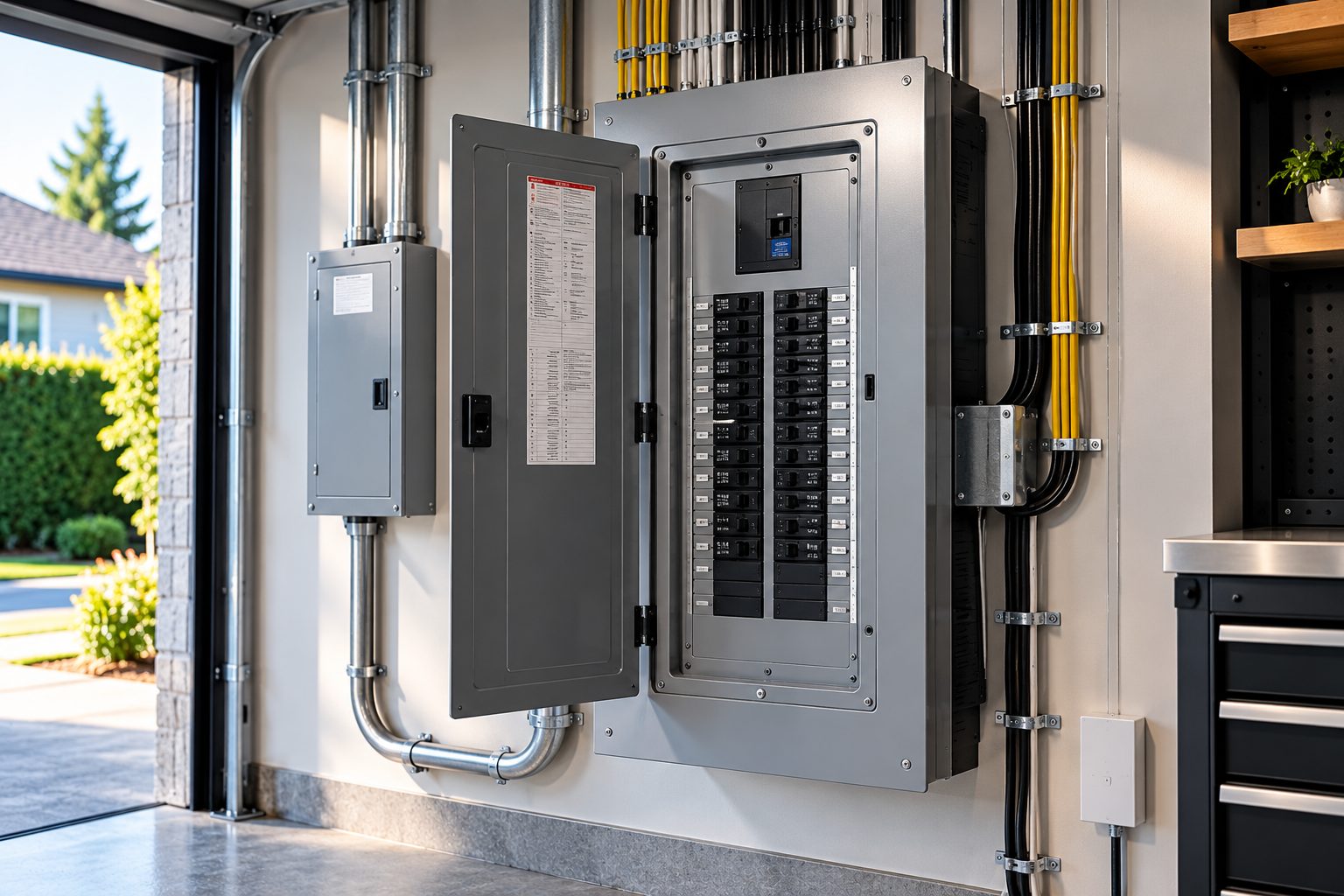
A modern residential electrical panel and subpanel in a garage

Electrical Upgrades

Built for the Way Homes Use Power Today.

Heat pumps, electric vehicles and energy storage can place new demands on a home’s electrical system. The right upgrades prepare a home for new equipment and changing energy needs.

  • Electrical panel assessments and upgrades
  • Dedicated circuits for compatible equipment
  • EV charging readiness
  • Electrical preparation for heat pumps and batteries
Explore Electrical Upgrades
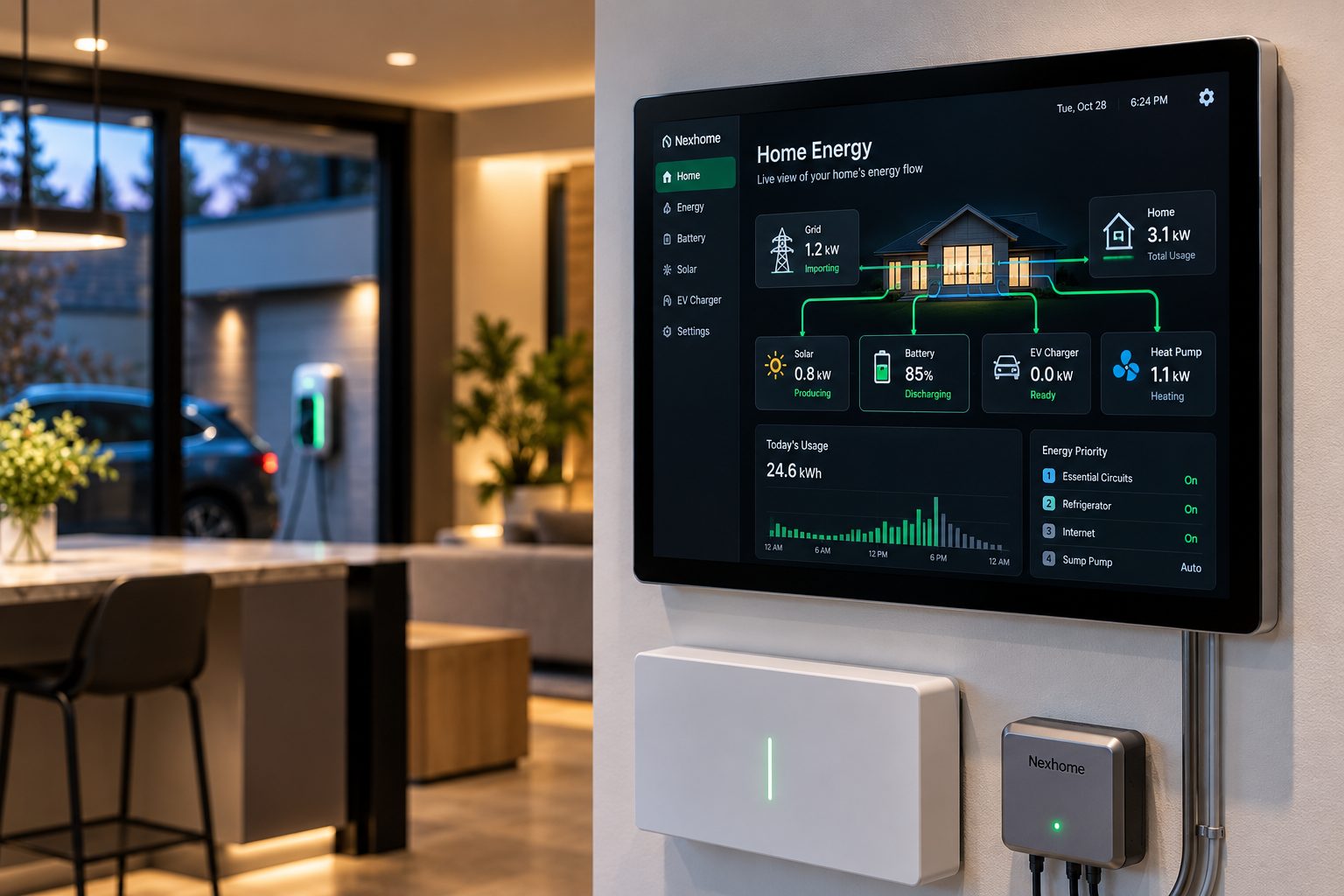
Illustrative home energy dashboard on a wall-mounted touchscreen

Smart Energy Management

More Insight. More Control.

Smart energy technology can help you monitor electricity use, manage compatible connected equipment, and make more informed decisions about how energy is used in your home.

  • Home energy monitoring
  • Compatible smart panel technology
  • Automated load management
  • Connected equipment integration
Explore Smart Energy
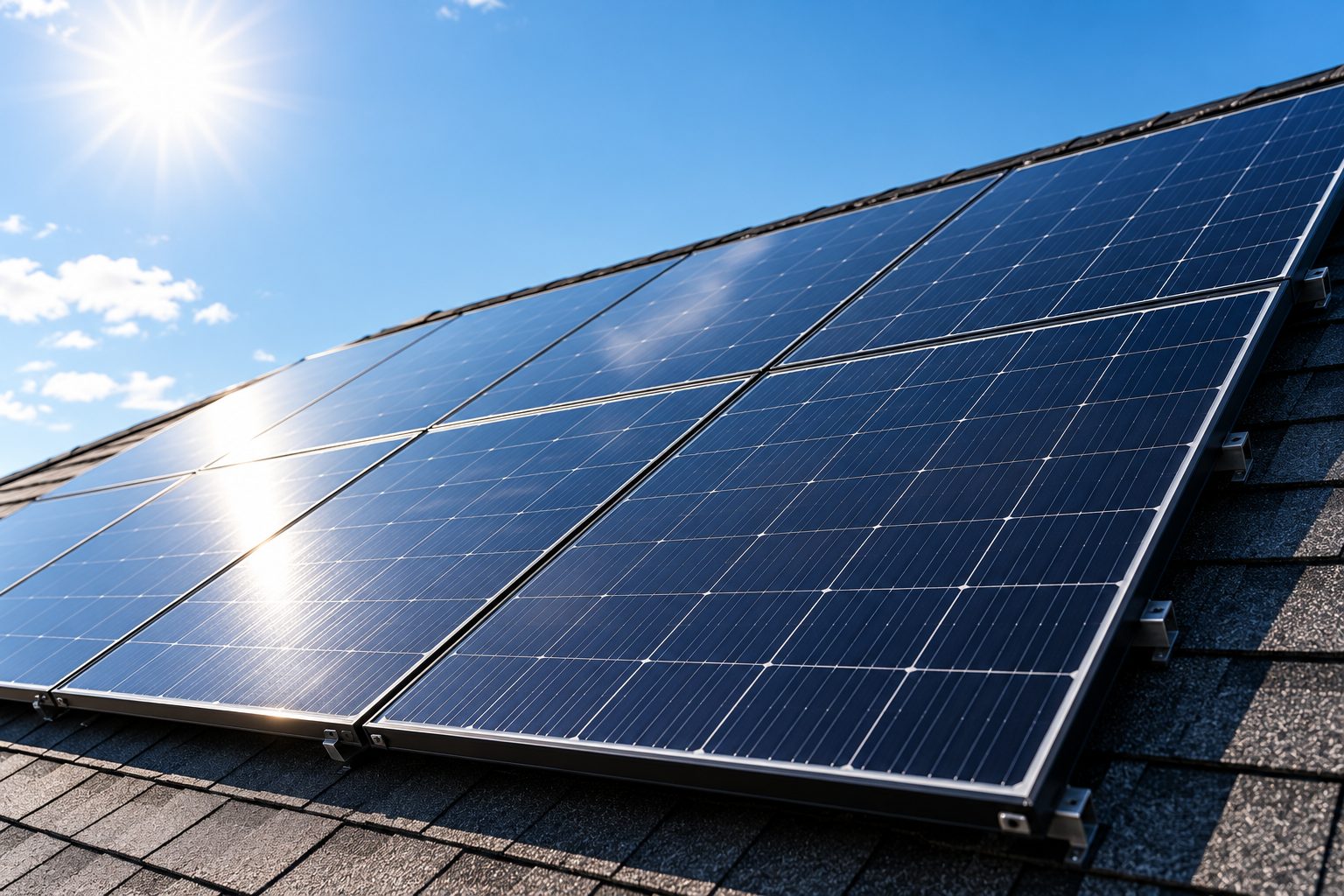
Solar panels on a shingled roof under a clear sky

Solar Energy

Make Your Own Electricity.

Solar panels turn sunlight into electricity for your home. A properly designed system can offset part of your electricity use, and can be paired with a battery to store energy for later.

  • Rooftop solar systems sized to your home
  • Battery-ready designs where supported
  • Utility connection and approvals coordinated
  • Monitoring of what your system produces
Explore Solar Energy
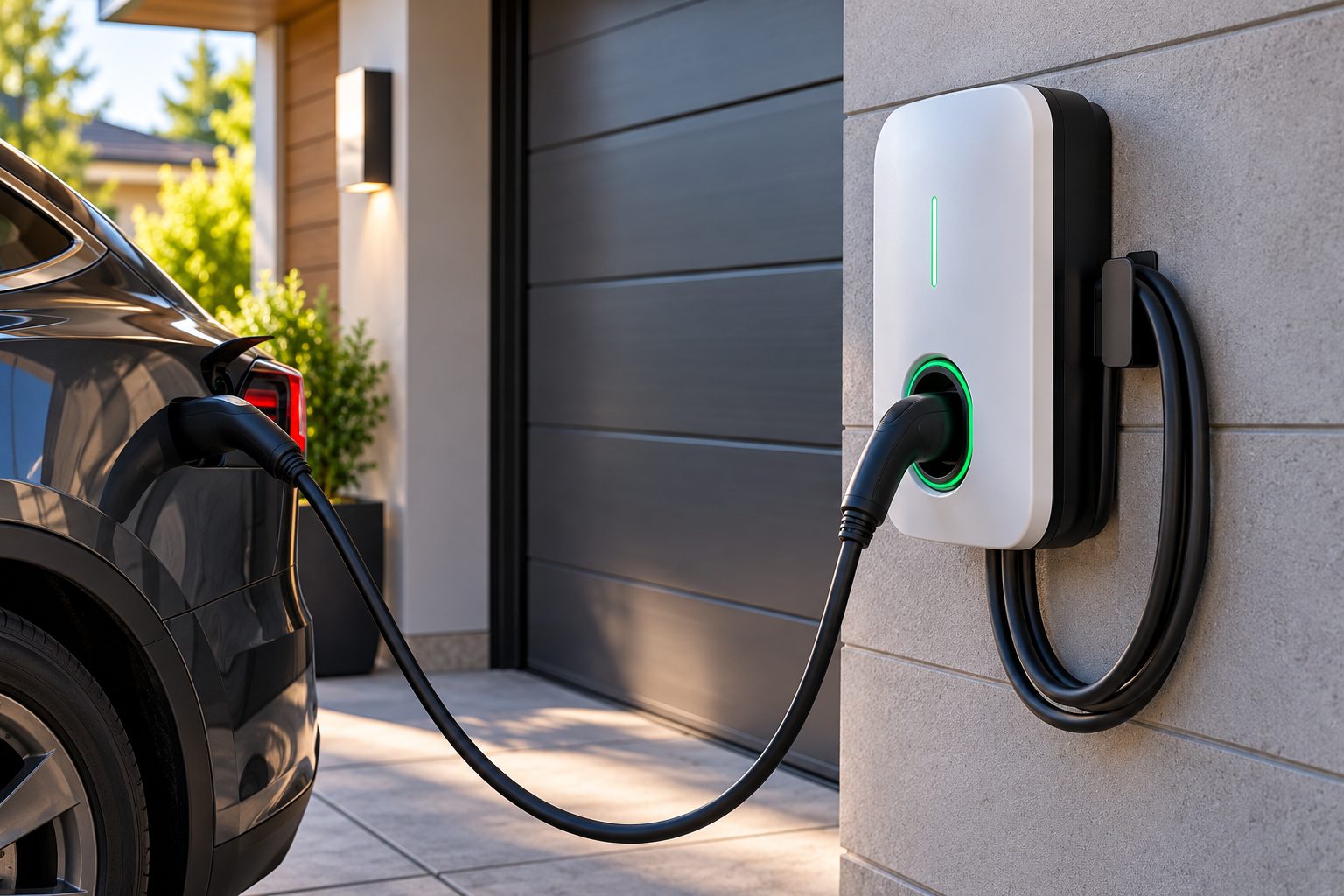
An electric car charging from a wall-mounted home charger beside a garage

EV Charging

Charge at Home. Ready Every Morning.

A home charger lets you charge an electric vehicle much faster than a standard outlet. Installation is planned around your electrical capacity, with load management where it helps.

  • Level 2 home charging
  • Electrical assessment and dedicated circuit
  • Load management options where suitable
  • Smart charging with compatible chargers
Explore EV Charging

Why it’s changing

Your home is becoming more electric.

Heat pumps, electric vehicles, connected devices and battery storage are changing how homes use electricity. The right infrastructure and technology help these systems work together.

01

Electrified heating and cooling

Modern heat pumps use electricity to provide both heating and cooling.

02

Solar generation

Rooftop solar lets a home produce some of its own electricity.

03

Electric vehicles

Home charging is becoming one of the largest electrical loads in many homes.

04

Backup power planning

Battery storage can support selected loads during grid outages when properly configured.

05

Electrical readiness

A home’s existing electrical system should be assessed before adding significant new loads.

06

Connected energy technology

Compatible monitoring and controls can give you more visibility and flexibility.

How it connects

One home. A connected energy strategy.

A well-designed home energy system considers how electricity enters your home, how it is distributed, which loads matter most, and how compatible technologies can work together.

Switch between normal operation and a grid outage to see the difference.

In normal operation, power from the grid and from solar panels reaches the main panel, which supplies the home, heat pump and EV charger and can charge the battery. A smart energy controller monitors compatible equipment.Solar panelsGridMeterMain panelBackupcircuitsBatteryHeat pumpSmartcontrollerEV charger
  1. Electricity enters from the grid through the meter to your main panel.
  2. Solar panels can supply part of your home’s electricity, and send any extra to the grid where your utility allows.
  3. The panel supplies your circuits and equipment, including a heat pump and an EV charger.
  4. A compatible battery can charge and stand ready for an outage, and a smart controller monitors compatible equipment.
Simplified illustration. Not all equipment is compatible; the system has to be designed together.

Backup power

What would you want powered during an outage?

Not every home needs the same backup system. Pick what matters to you to see a rough idea of how long a battery could keep it running.

What would you want powered during an outage?
Adjust the typical loads

Typical averages, including cycling on and off. Your equipment may use more or less.

Rough estimate

Average draw of what you picked
160 W
Rough runtime on a full 13.5 kWh battery
3.3 days
Peak power with the largest start-up
1.2 kW

Battery sizing depends on actual electrical demand, usable storage capacity, equipment compatibility, and backup system design.

How this is worked out
  • Average draw of about 155 W across what you picked, using typical figures you can adjust.
  • About 90% of the battery’s usable 13.5 kWh reaches your home after conversion losses.
  • Real draw changes through the day and with the weather; heating loads in winter can be much higher.
  • Without solar or another source to recharge it, the battery runs down and stops.
  • This is a rough estimate. Actual runtime depends on your equipment, how it is used, and the system design.

Solar

What could solar produce on your roof?

A rough yearly estimate from your province, roof direction and shading, using Natural Resources Canada’s solar data.

On your bills or your utility’s online account. Adds how much of your use solar could cover.

Adjust the assumptions

Default production is from Natural Resources Canada, Photovoltaic Potential and Solar Resource Maps of Canada, for a south-facing system at ideal tilt.

Rough estimate

Estimated yearly production
9,288 kWh
Estimated value a year at your rate
$1,393
Illustrative 10-year value
$13,932
How this is worked out
  • 8 kW × 1161 kWh per kW a year (a south-facing system at ideal tilt in your area) × 100% for roof direction × 100% for shading.
  • Production is much higher in summer than in winter; this is a yearly total.
  • Value assumes each kWh produced is worth your electricity rate of $0.15. How solar is credited depends on your utility’s net metering rules.
  • Panel output declines slowly with age, and real results depend on the roof, equipment, snow and weather.
  • This is a rough estimate, not a system design or a quote.

Electrical readiness

Is your home ready for what’s next?

Before installing some electrical equipment, it’s important to understand your home’s existing capacity and wiring.

Electrical panel

Understand the condition and capacity of your existing panel.

Heat pump readiness

Assess the electrical requirements of a new heating and cooling system.

Battery readiness

Review the installation location, electrical connections and backup configuration.

EV charging readiness

Explore dedicated circuits and suitable load-management options.

Solar readiness

Roof condition, orientation and shading, structure, the electrical connection, and utility approval.

An electrical assessment determines whether upgrades are needed. A panel replacement is not automatically required for every installation.

Smart energy

Understand your energy. Manage it more intelligently.

Energy monitoring and control technology can show you how electricity is used and help coordinate compatible equipment.

Illustrative example — not real data
Home electricity use2.4 kW
Battery charge76%
GridConnected

Selected circuits

Kitchen
Heat pump
Laundry
Office

Equipment

BatteryReady
Heat pumpRunning
EV chargerScheduled

Monitor

See how electricity is being used, with supported monitoring equipment.

Manage

Prioritize or schedule compatible loads using the right controls.

Integrate

Connect compatible battery, solar, EV charging and home energy technology where supported.

How we work

The right energy solution starts with the right plan.

1

Understand your needs

We discuss your backup priorities, existing equipment and future energy plans.

2

Assess your home

We review your electrical system, compatibility and the installation requirements that apply.

3

Design the solution

We select suitable equipment and plan how the components work together.

4

Install and support

We coordinate appropriately licensed professionals and give you clear information on operation and support.

Regulated electrical work is carried out by appropriately licensed professionals, according to the requirements in your province.

Questions

Frequently asked questions

What is a home battery?

A battery that stores electricity and can supply connected loads under the right operating conditions, such as during an outage when the system is set up for backup.

Can a battery power my entire house?

Some systems can be designed for broader backup, but what a battery can run depends on its capacity, the inverter’s output, your loads and the system design. Many homes back up selected essential circuits.

Do I need solar panels to install a home battery?

Not necessarily. Some battery systems can charge from the grid. Equipment configuration and any incentive eligibility vary.

Will I need to upgrade my electrical panel?

Not always. A qualified electrical assessment determines whether your existing capacity and equipment are suitable.

Can I use a battery with my heat pump?

Potentially, if the system is designed for the heat pump’s electrical demand, including the extra power some equipment draws when starting up.

Does solar keep my power on during an outage?

Usually not on its own. Grid-tied solar shuts off during an outage for safety. To keep using solar power in an outage, it needs to be paired with a battery or backup-capable equipment designed for it.

Do I need a battery with solar?

No. Many solar systems connect to the grid without a battery. A battery adds backup power and lets you store solar energy for later, where the system supports it.

What happens to extra solar power?

Many utilities offer net metering, crediting you for electricity you send to the grid. Rules vary by province and utility, and the connection must be approved by your utility.

What does a home EV charger need?

A Level 2 charger usually needs a dedicated 240-volt circuit. Where panel capacity is tight, load-management devices recognized by the electrical code can sometimes avoid a service upgrade. An assessment tells you what your home needs.

What is a smart electrical panel?

A panel, or a related energy management system, that can monitor your circuits and, with suitable equipment, control selected ones.

Can smart energy management reduce my electricity bill?

It may help you spot usage patterns or shift some loads to cheaper times, but any savings depend on your usage, your utility rates and the equipment.

Does Nexhome offer installation in my province?

It depends on where you are and on our approved service network. Tell us your postal code and we will let you know.

Are there government rebates for batteries, solar or EV chargers?

Some jurisdictions and utilities offer incentives with specific conditions. We only share rebate information once we have verified it against the program itself.

Ready to power what’s next?

Whether you’re considering backup power, solar, EV charging, an electrical upgrade, or smarter energy technology, Nexhome can help you understand your options.

Talk to an Energy Specialist

Already a customer with a service issue? Request service online, call 1‑888‑770‑7179 or email service@nexhome.ca.

Get my free consultation

Tell us what you are looking at and we will come back with real numbers — what it costs, what you qualify for, and what we would recommend.

No obligation. We will call once — if it is not for you, tell us and that is the end of it.