
Heating & Cooling · Central heat pumps
Central Heat Pumps. Comfort That Works Year-Round.
Heat and cool your home with one energy-efficient system. Discover how central heat pumps work, explore available government incentives, and see what switching could mean for your home.
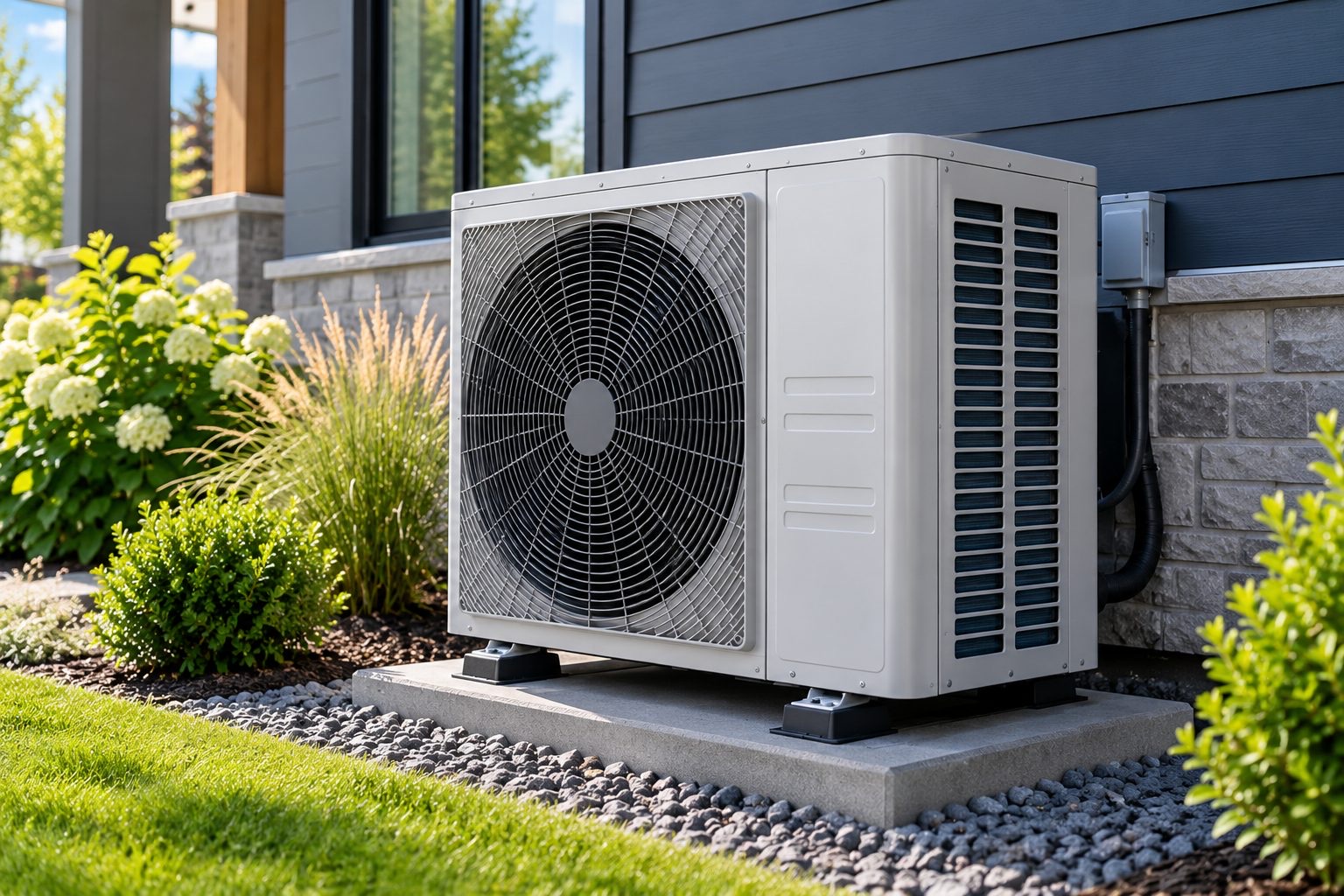
How it works
What is a central heat pump?
A central heat pump moves heat rather than making it by burning fuel. In winter it collects heat from the outdoor air, even on cold days, and brings it inside. In summer it runs in reverse, taking heat out of your home and releasing it outdoors.
An indoor unit connected to your ductwork then sends that warm or cool air to every room, the same way a furnace and central air conditioner do.
Why homeowners switch
Benefits of a central heat pump
Year-round comfort
One system provides both heating and cooling.
Energy-efficient operation
Heat pumps can deliver several units of heat for each unit of electricity they use, depending on outdoor conditions.
Cold-climate technology
Modern cold-climate models are designed to keep heating at low outdoor temperatures.
Whole-home comfort
A central system sends heating and cooling to every room through existing or properly designed ductwork.
Flexible system options
Choose an all-electric system, or a hybrid setup that works with a compatible furnace.
How much any home saves depends on its fuel, rates, climate and equipment. The calculator below gives you an estimate.
System types
All-electric or hybrid?
Neither is right for every home. It depends on your current heating, your rates and your house.
All-electric central heat pump
An outdoor heat pump paired with an indoor air handler, usually with electric backup heat built in. It replaces the furnace.
Hybrid heat pump system
A heat pump added to a compatible furnace. The furnace provides heat when that makes more sense, such as in extreme cold.
| Compare | All-electric | Hybrid |
|---|---|---|
| Heating performance | The heat pump heats the home through the winter. Capacity drops as it gets colder, so it is sized for your home’s heat loss. | The heat pump handles most of the season. The furnace takes over when it is very cold or when gas is cheaper to run. |
| Backup heating | Usually electric heat strips in the air handler for the coldest hours. | Your furnace is the backup. |
| Existing equipment | Replaces the furnace with an indoor air handler. Ductwork is often reused. | Keeps a compatible furnace and adds the heat pump to it. |
| Operating costs | Depends mostly on your electricity rate and how cold it gets. Often lower than oil, propane or electric baseboard. | Lets the system use whichever source costs less to run, which can suit homes on natural gas. |
| Installation | Electrical capacity needs checking, since backup heat draws significant power. | Furnace compatibility and controls need checking so the two work together. |
Rebate checker
See what you may qualify for
A few questions, no contact details. Results show possible eligibility, not approval.
Answer a few questions to see which programs you may qualify for. You do not need to give us any contact details.
New: what we know so far about the federal heat pump rebate.
Running costs
What would a heat pump cost to run?
An honest comparison with what you pay now. Depending on your fuel and rates, a heat pump can cost less or more to run.
Heating only. Your fuel bills for the winter months are a good guide; leave out fixed monthly charges.
Adjust the assumptions
Defaults are typical starting points for your province. For the most useful estimate, use the rates on your own bills.
Enter your yearly heating cost or use to see an estimate.
Project cost
Estimate your cost after incentives
Rebates are paid after installation and are subject to program approval. They are not deducted from your invoice.
Use the price on a written quote, and the amounts from the rebate checker above. Your consultation gives you a quote for your home.
Enter an estimated project price to see the figures.
Is it right for my home?
What decides whether a central heat pump fits
The right system comes from a professional assessment of your home, not from its square footage alone.
Home size and layout
Bigger is not the measure. What matters is how much heat the home loses.
Existing ductwork
Heat pumps often move more air than a furnace, so duct size and condition matter.
Insulation and air sealing
A tighter home needs a smaller system and costs less to heat.
Heating and cooling load
A load calculation for your home, not square footage alone, sets the size.
Electrical capacity
Your panel needs room for the heat pump and any electric backup heat.
Local climate
The coldest days in your area decide how much backup heat you need.
Backup heating
Electric strips or an existing furnace, chosen to fit your home and rates.
Equipment sizing
Too large or too small both cost comfort and money.
Furnace compatibility
For a hybrid system, the furnace and controls must work with the heat pump.
How we work
The Nexhome installation process
Home consultation
We learn about your home, your current equipment, your comfort needs and the incentives you may qualify for.
System recommendation
We recommend suitable equipment and explain exactly what the installation involves.
Professional installation
Qualified installers complete the work to the applicable codes and requirements.
System walkthrough and support
We show you how your new system works and give you the warranty and support information that applies.
Comfort Today. Flexible Payment Options.
Explore financing options that may help make your home comfort upgrade more manageable.
Questions
Frequently asked questions
Do central heat pumps work during Canadian winters?
Cold-climate heat pumps are designed to keep heating at low outdoor temperatures, though both their output and efficiency fall as it gets colder. That is why a properly sized system includes backup heat for the coldest days. Rated low-temperature performance varies by model, so it is worth checking for the equipment you are considering.
Can a heat pump replace my furnace?
Often, yes. An all-electric system replaces the furnace with an air handler and electric backup heat. Whether it suits your home depends on its heat loss, your ductwork and your electrical capacity, which a home assessment will tell you. Some homeowners keep the furnace instead and run a hybrid system.
What is a hybrid heating system?
A heat pump paired with a compatible furnace. The heat pump heats the home for most of the season, and the furnace takes over below a set outdoor temperature or when it is cheaper to run.
Can I use my existing ductwork?
In many homes, yes. Heat pumps usually need more airflow than a furnace, so the ducts are checked for size and condition during the assessment. Some homes need modifications.
How much electricity does a heat pump use?
It depends on how much heat your home needs, how efficient the equipment is, how cold your winters are, and how much backup heat is used. The calculator above gives an estimate from your own figures.
How long does installation typically take?
It depends on the scope of the work, such as whether ductwork or electrical upgrades are needed. We give you a timeline for your project once we have assessed your home.
What government rebates could I qualify for?
A federal National Heat Pump Rebate has been announced, and provincial programs are available in some provinces. The rebate checker on this page shows the programs that may apply to you. Every program sets its own rules, and approval is up to the program.
Can federal and provincial rebates be combined?
The federal government has said its new rebate can be combined with existing provincial programs. Each provincial program also has its own rules, so our checker only adds programs together where the rules allow it.
What happens during extremely cold weather?
As the temperature drops, a heat pump produces less heat. Backup heat, either electric heat strips or your furnace in a hybrid system, makes up the difference so your home stays warm.
How long do central heat pumps typically last?
Many last 15 years or more. Lifespan depends on the equipment, how well it was installed, how hard it works in your climate, and how well it is maintained.
Do heat pumps require regular maintenance?
Yes. Change or clean filters regularly, keep the outdoor unit clear of snow, ice and debris, and have the system serviced by a professional on a regular schedule.
Can a central heat pump cool my entire home?
Yes, when it is sized for your home’s cooling load and the ducts reach every room. It also removes humidity as it cools.
Let’s Find the Right Heat Pump for Your Home.
Our team can help you explore equipment options, potential government incentives, and installation requirements.