
Water Heating · Electric
Simple. Reliable. Electric Hot Water.
Explore electric storage water heaters designed to provide dependable hot water without requiring an on-site gas connection.
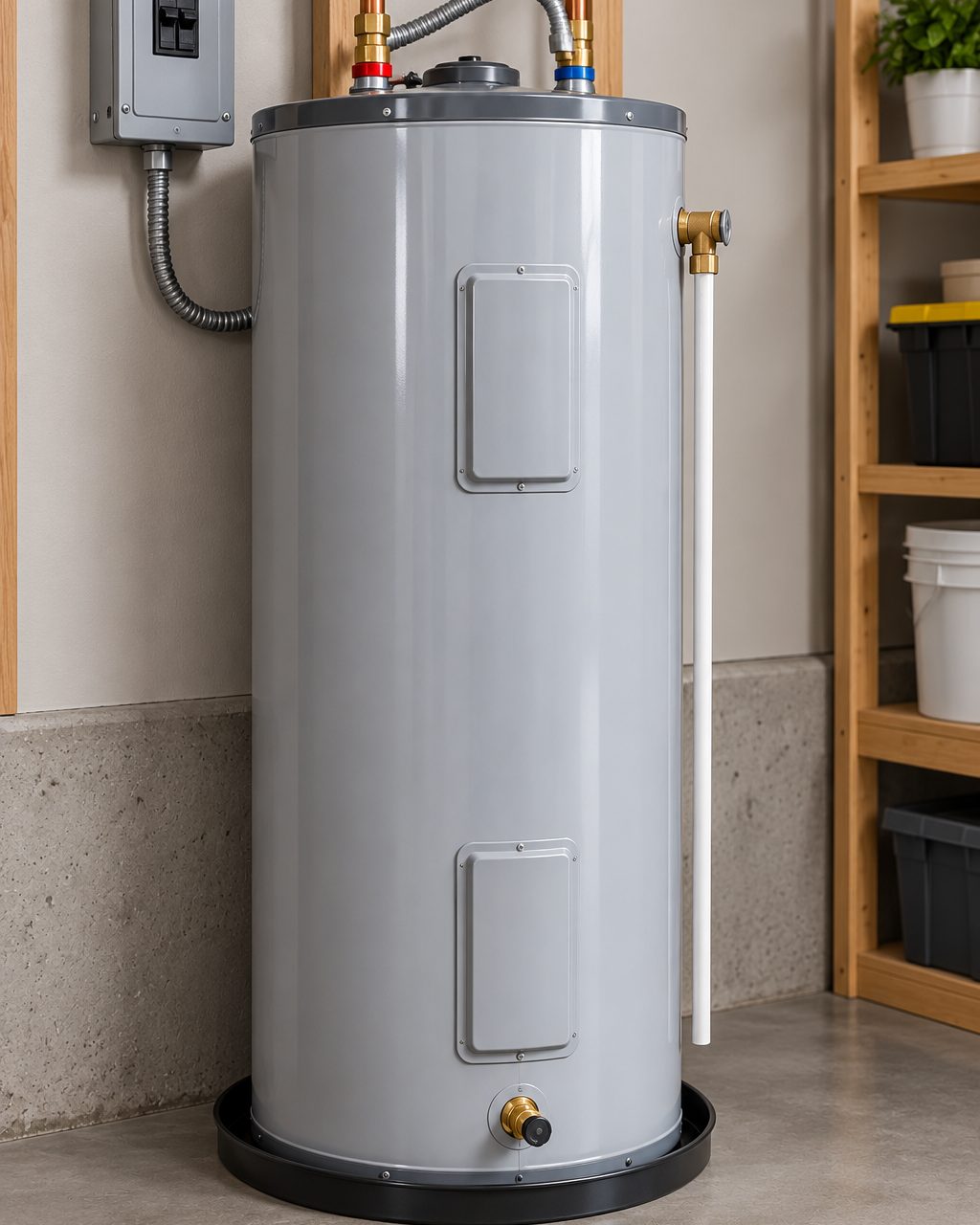
How it works
What is an electric water heater?
Electric resistance elements heat water stored in an insulated tank, so hot water is ready when you open a tap.
Heating elements
Usually an upper and a lower element that heat the water directly.
Thermostats
One for each element, switching it on and off to hold the set temperature.
Storage tank
Holds the heated water until you need it.
Insulation
Foam around the tank slows heat loss while water is stored.
Temperature and pressure relief valve
A safety valve that opens if the temperature or pressure gets too high.
- Cold water enters the bottom of the insulated tank.
- Upper and lower electric elements, each with a thermostat, heat the water.
- Hot water leaves from the top when you open a tap.
- A temperature and pressure relief valve protects the tank.
Why electric
Benefits of electric water heaters
No on-site combustion
No flame and no fuel burned in the home.
Straightforward operation
Simple, familiar technology with few components.
Multiple tank capacities
Sizes for smaller and larger households.
No exhaust venting
No chimney or vent pipe is needed.
Works with suitable electrical installations
Needs an appropriate circuit, usually 240 volts.
Electric resistance is not always the cheapest to run. Compare the options below.
Sizing
Choosing tank capacity
Household size
A starting point, but habits matter more than headcount.
Hot water usage
Long showers, baths and laundry all add up.
Recovery rate
Electric tanks reheat more slowly than gas, so a larger tank is sometimes chosen to compensate.
Simultaneous demand
Several fixtures at once draw the tank down faster.
Electrical requirements
Most need a dedicated 240-volt circuit sized for the elements.
Tank placement
Floor space, height, clearances and a drain nearby.
Compare
Traditional electric or hybrid heat pump?
A conventional electric water heater uses resistance elements. A hybrid heat pump water heater mainly moves heat from the surrounding air into the stored water, and can be substantially more efficient where conditions suit it.
| Compare | Standard electric | Hybrid heat pump |
|---|---|---|
| How it heats | Electric resistance elements | A heat pump moves heat from the surrounding air, with elements as backup |
| Energy consumption | Higher | Can be substantially lower in heat pump mode under suitable conditions |
| Installation space | Standard tank footprint | Taller unit, and needs enough surrounding air |
| Upfront cost | Lower | Higher |
| Operating costs | Higher electricity use | Lower electricity use; may add a little winter space heating |
| Noise | Nearly silent | A fan and compressor hum, similar to a dehumidifier |
| Maintenance | Flushing, anode checks | Also filter cleaning and condensate drain checks |
| Electrical requirements | Usually a 240-volt circuit | Usually a 240-volt circuit; some models plug into 120 volts |
| Potential incentives | None currently listed | Some provincial programs |
Running costs
What would an electric water heater cost to run?
Shows yearly electricity use and cost. Try a hybrid on the hybrid page to compare.
That suggests about 150 litres of hot water a day. Change it under the assumptions if you know your use.
Adjust the assumptions
Incoming water is colder in winter, which raises the energy needed. The default is a yearly average for your province.
- Estimated current yearly water heating cost
- $501
- Estimated yearly cost with a new electric tank
- $489
- Potential yearly savings
- $12
- Illustrative 10-year difference
- −$120
| Part | Now | New |
|---|---|---|
| Energy used | 3,341 kWh | 3,259 kWh |
| Water heating | $501 | $489 |
How this is worked out
- Hot water: about 150 litres a day, heated from 10 °C to 55 °C (about 2,865 kWh of heat a year).
- Efficiency is based on each system’s UEF rating. Storage tanks also lose heat while standing, which matters more when a household uses less hot water than the rating test assumes.
- Power-vent blowers, tankless electronics, fixed monthly charges and maintenance are not included.
- The 10-year figure is the yearly difference × 10 at today’s prices. It does not include equipment, installation, rebates or financing.
- This is an estimate, not a guarantee. Real use varies with household habits and the season.
Incentives
Electric water heater rebates
Answer a few questions to see which programs you may qualify for. You do not need to give us any contact details.
Installation
Installation considerations
Electrical circuit
A dedicated circuit and breaker sized for the elements.
Tank location
Space for the tank with clearances for service.
Water connections
Cold supply, hot outlet, and shut-off valves.
Drainage
A drain or pan for the relief valve and for flushing.
Safety controls
A properly installed temperature and pressure relief valve and discharge line.
Appropriate sizing
Matched to your household’s actual hot water use.
Professional installation
Electrical and plumbing work done to code.
How we work
The Nexhome installation process
Home consultation
We look at your current water heater, how your household uses hot water, and your electrical panel and the available space.
Equipment recommendation
We recommend electric options and sizes and explain what the installation involves.
Professional installation
Qualified installers complete the work, including electrical, plumbing and safety controls, to the applicable codes.
System walkthrough and support
We show you how the unit works and how to flush and look after it, and give you the warranty and support information that applies.
Comfort Today. Flexible Payment Options.
Explore financing options that may help make your home water heating upgrade more manageable.
Questions
Frequently asked questions
How does an electric water heater work?
Electric elements inside an insulated tank heat the water, controlled by thermostats. Hot water leaves from the top when you open a tap, and cold water refills the tank from the bottom.
What size tank do I need?
It depends on how much hot water you use and how much at once. Household size is a starting point, and the first-hour rating is a good guide. An assessment matches the tank to your household.
How much electricity does it use?
It depends on how much hot water you use and the incoming water temperature. The calculator above estimates your yearly use in kWh.
Does it require a dedicated circuit?
Usually yes. Most need a dedicated 240-volt circuit sized for the elements.
How long does an electric water heater last?
Many electric tanks last about 10 to 15 years, depending on water quality and maintenance.
Is electric cheaper than gas?
Usually not to run, because electricity costs more per unit of heat in most of our provinces. Electric tanks usually cost less to buy and install, and need no venting. The calculator compares them at your rates.
What is the difference between electric and hybrid?
A standard electric tank heats water with elements. A hybrid uses a heat pump to move heat from the air into the water, which can use much less electricity. See the comparison above.
Does an electric water heater require venting?
No. There is no combustion, so no exhaust vent is needed.
What maintenance is required?
Periodic flushing to remove sediment, checking the anode rod, and testing the relief valve.
Are rebates available?
Standard electric tanks are not eligible for the incentives that some provinces offer on heat pump water heaters. The checker above shows what is listed.
Let’s Find the Right Water Heater for Your Home.
Our team can help you explore options, understand installation requirements, and choose a system suited to your household.