
Heating & Cooling · Ductless mini-splits
Targeted Comfort. Efficient Heating & Cooling.
Enjoy personalized comfort with ductless heat pump systems designed to heat and cool individual rooms or multiple areas of your home. Explore cold-climate options, potential government incentives, and estimated energy savings.
How it works
What is a ductless mini-split?
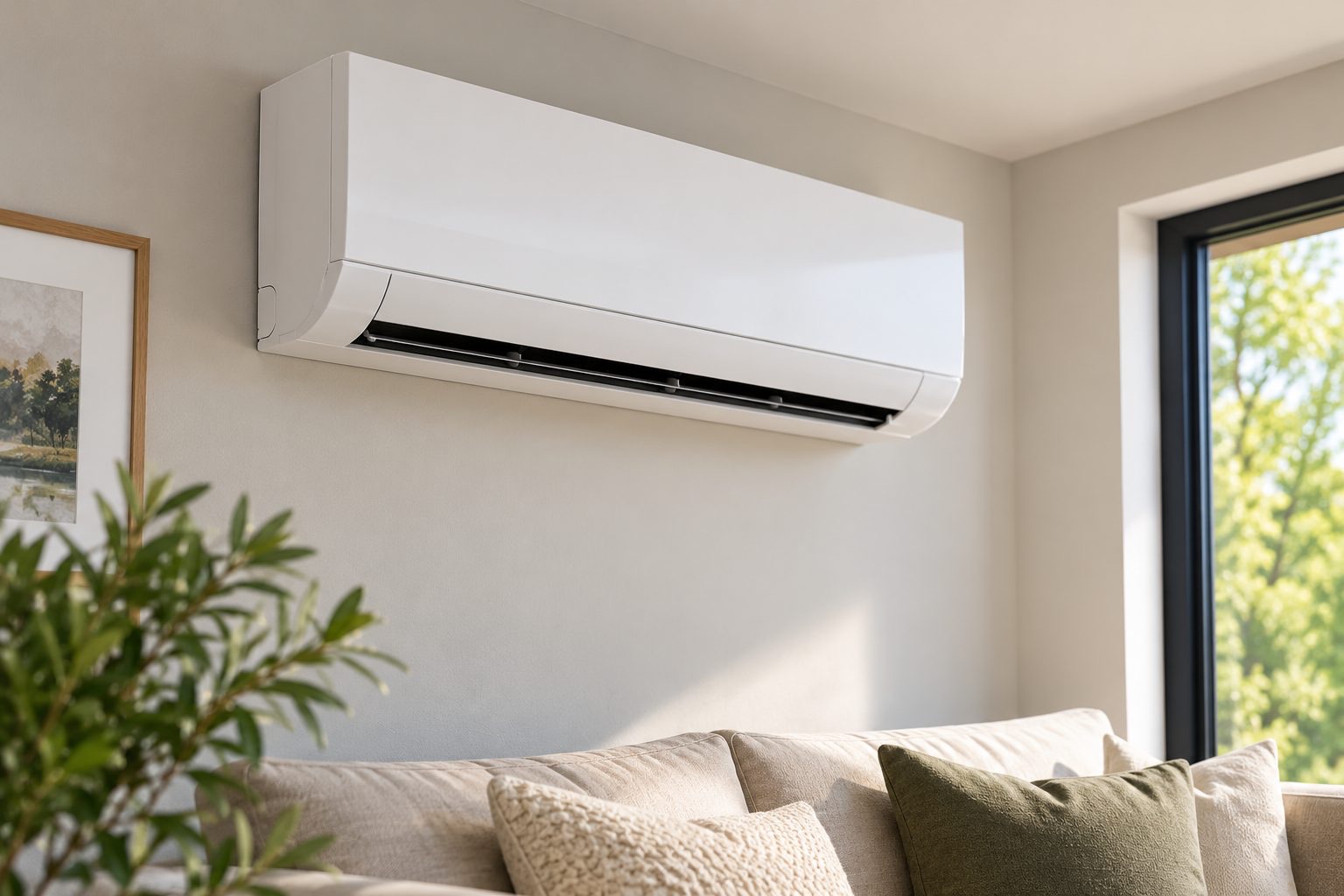
A ductless mini-split pairs an outdoor heat pump with one or more indoor units. It heats and cools the rooms those units serve, without conventional ductwork.
Like any heat pump, it moves heat rather than making it by burning fuel. Some models are designed specifically for cold-climate heating.
- The outdoor unit collects heat from outside air, even on cold days, or releases heat in summer.
- Refrigerant lines run through a small hole in the wall.
- The indoor unit heats or cools the room directly. No ducts are needed.
- A multi-zone system connects several indoor units to one outdoor unit.
Why ductless
Benefits of ductless mini-splits
Heating and cooling
One system provides both heating and cooling.
No traditional ductwork required
Useful for homes, additions and spaces without existing ducts.
Individual room comfort
Heat or cool the rooms you choose, each with its own setting.
Energy-efficient operation
Heat pump technology can use less energy than some conventional heating, such as electric baseboards.
Flexible installation options
Configurations for a single room or several zones.
How much any home saves depends on what it heats with today, its rates, and how much of the home the system covers.
System types
Types of ductless systems
Single-zone
One outdoor unit connected to one indoor unit. Common for an addition, a single room, or a smaller open space.
Multi-zone
One outdoor unit connected to several compatible indoor units, each area with its own temperature control.
Cold-climate
Models designed to keep heating at lower outdoor temperatures. Capacity and efficiency still fall as it gets colder, and vary by model.
| Compare | Single-zone | Multi-zone | Cold-climate |
|---|---|---|---|
| Indoor units | One | Two or more | One or more |
| Heating and cooling | Both | Both | Both, with heating designed for colder weather |
| Installation complexity | Simplest | More line sets, wiring and planning | Similar to standard models |
| Temperature control | One area | Each zone set separately | Depends on single or multi-zone |
| Cold-climate performance | Varies by model | Varies by model | Designed for it; still varies by model and temperature |
| Typical applications | Additions, single rooms, smaller spaces | Several rooms or floors | Homes relying on it for much of their winter heat |
Indoor units
Indoor unit options
Which styles are available depends on the manufacturer and the system configuration.
Wall-mounted
The most common style, mounted high on an interior or exterior wall.
Floor-mounted
Sits low on the wall, often where a radiator or baseboard used to be.
Ceiling cassette
Fits into the ceiling and spreads air in several directions.
Concealed ducted
Hidden in a ceiling or bulkhead, with short ducts to one or more nearby rooms.
Rebates & incentives
Explore potential heat pump rebates
Not every ductless system qualifies. Eligibility can depend on your province, your household, your current heating, the equipment’s certification and cold-climate performance, how much of the home it heats, and where the indoor units go.
Answer a few questions to see which programs you may qualify for. You do not need to give us any contact details.
New: what we know so far about the federal heat pump rebate.
Running costs
What would ductless cost to run?
Most homes use ductless for part of their heating, so this keeps your existing system running for the rest.
Your existing heating keeps running for the rest of the home and the coldest days.
Adjust the assumptions
Entering both areas replaces the coverage choice above. Defaults are typical figures for your province.
Enter your yearly heating cost or use to see an estimate.
Is it right for my home?
Where ductless works well
The right system depends on heating loads, room layout, insulation, climate and how the units can be installed. One indoor unit will not heat a whole home with closed-off rooms.
Homes without ductwork
Heating and cooling without installing ducts.
Older homes
Room-by-room comfort where ducts would be hard to add.
Home additions
Heat and cool new space without extending the existing system.
Finished basements
Comfort in a space that often runs cooler or damp.
Problem rooms
Rooms that are always too hot or too cold.
Multi-zone comfort
Separate control for different areas of the home.
Supplementing existing heat
Taking on much of the load while existing heating covers the rest.
Compare
Ductless or central heat pump?
| Compare | Ductless mini-split | Central heat pump |
|---|---|---|
| Ductwork | None needed; concealed units use short ducts | Uses existing or new ductwork |
| Room-by-room control | Yes, each indoor unit set separately | Usually one thermostat, unless zoned |
| Whole-home coverage | Depends on how many indoor units and where they go | Designed to serve the whole home |
| Installation | Indoor unit placement, line routing, drainage and wiring for each unit | Outdoor unit, indoor coil or air handler, and duct checks |
| Heating and cooling | Both | Both |
| Potential incentives | May qualify, depending on the program, equipment and how much of the home it heats | May qualify, depending on the program and equipment |
| Equipment | Outdoor unit plus one or more indoor units | Outdoor unit plus an air handler or furnace |
How we work
The ductless installation process
Home consultation and room assessment
We look at the rooms you want to heat and cool, how the home is used, and your current heating.
System design and equipment selection
We plan indoor-unit placement, refrigerant line routes, condensate drainage and electrical requirements, and recommend equipment.
Professional installation
Qualified installers complete the work to the applicable codes and requirements.
System walkthrough and support
We show you how to use and clean the system, and give you the warranty and support information that applies.
Flexible Options for Better Home Comfort.
Explore financing options that may help make your heating and cooling upgrade more manageable.
Questions
Frequently asked questions
Do ductless heat pumps work in Canadian winters?
Cold-climate models are designed to keep heating at low outdoor temperatures, though their output and efficiency fall as it gets colder. Many homes keep their existing heating for the coldest days.
Can a mini-split heat an entire house?
Sometimes, in an open, well-insulated home with enough indoor units. One indoor unit mainly heats the open area around it, not rooms behind closed doors, so most whole-home setups need several units or keep other heating.
How many indoor units will I need?
It depends on the layout, how much heat each area loses, and how rooms are separated. A design assessment of your home answers this.
What is the difference between single-zone and multi-zone systems?
A single-zone system has one indoor unit per outdoor unit. A multi-zone system connects several indoor units to one outdoor unit, each with its own temperature setting.
Are ductless heat pumps expensive to operate?
It depends on what they replace. They often cost less to run than electric baseboards, oil or propane, and can cost more than natural gas. The calculator above estimates it for your home.
Can I keep my existing heating system?
Yes. Many homeowners keep it for rooms the mini-split does not reach and for the coldest days.
Do mini-splits require ductwork?
No. Wall, floor and ceiling units need no ducts. Concealed ducted units use short ducts to nearby rooms.
What government rebates are available?
A federal heat pump rebate has been announced, and some provincial programs pay for mini-splits. The checker above shows what is listed for your province. Each program sets its own rules.
How often do the filters need cleaning?
Indoor-unit filters are washable. Check them regularly, often monthly when the system is working hard, and follow the manufacturer’s schedule. Professional maintenance once a year is also recommended.
How long does installation take?
It depends on the number of indoor units, line routing and electrical work. We give you a timeline after assessing your home.
Are ductless systems noisy?
Indoor units are usually quiet. The outdoor unit makes some noise, which varies by model and placement.
Can ductless heat pumps provide air conditioning?
Yes. They cool in summer as well as heat in winter.
Comfort Where You Need It Most.
Discover whether a ductless heat pump is the right heating and cooling solution for your home.