
Water Treatment · Whole-home carbon filtration
Fresh-Tasting Water. Throughout Your Home.
A properly selected whole-home carbon filtration system can help reduce chlorine-related taste and odour and other specifically targeted substances, making water more pleasant for everyday household use.
What it is
A simple idea. Powerful filtration technology.
Activated carbon is extremely porous, with a huge surface area. As water passes through it, certain substances stick to that surface, a process called adsorption, and stay behind in the media.
How well it works depends on the system’s design, the type of carbon, how long the water is in contact with it, the flow rate, and its certifications. Not every carbon filter reduces every substance.
Everyday benefits
Water that better suits your everyday routine.
Improved taste
Properly certified carbon systems can reduce certain substances that affect how water tastes.
Reduced chlorine odour
Appropriate activated carbon media can reduce free chlorine in treated water.
Whole-home treatment
Water is treated where it enters the home, before it reaches your taps and fixtures.
Convenient everyday use
No separate filter needed at every tap for what the system is certified to treat.
Works with other water solutions
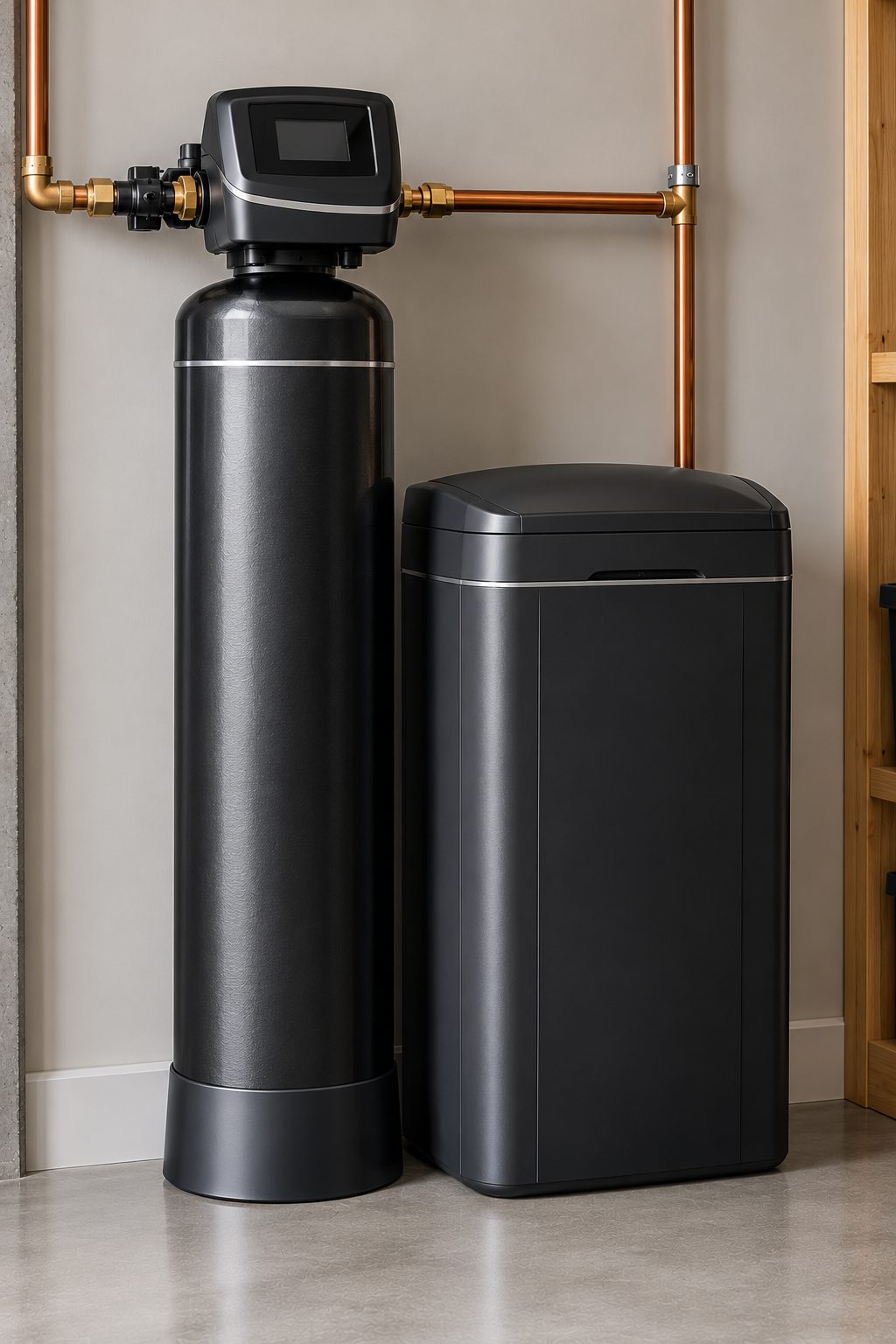
Carbon filtration can be paired with a water softener or a drinking-water RO system when designed together.
The system
One tank, treating all the water in your home.
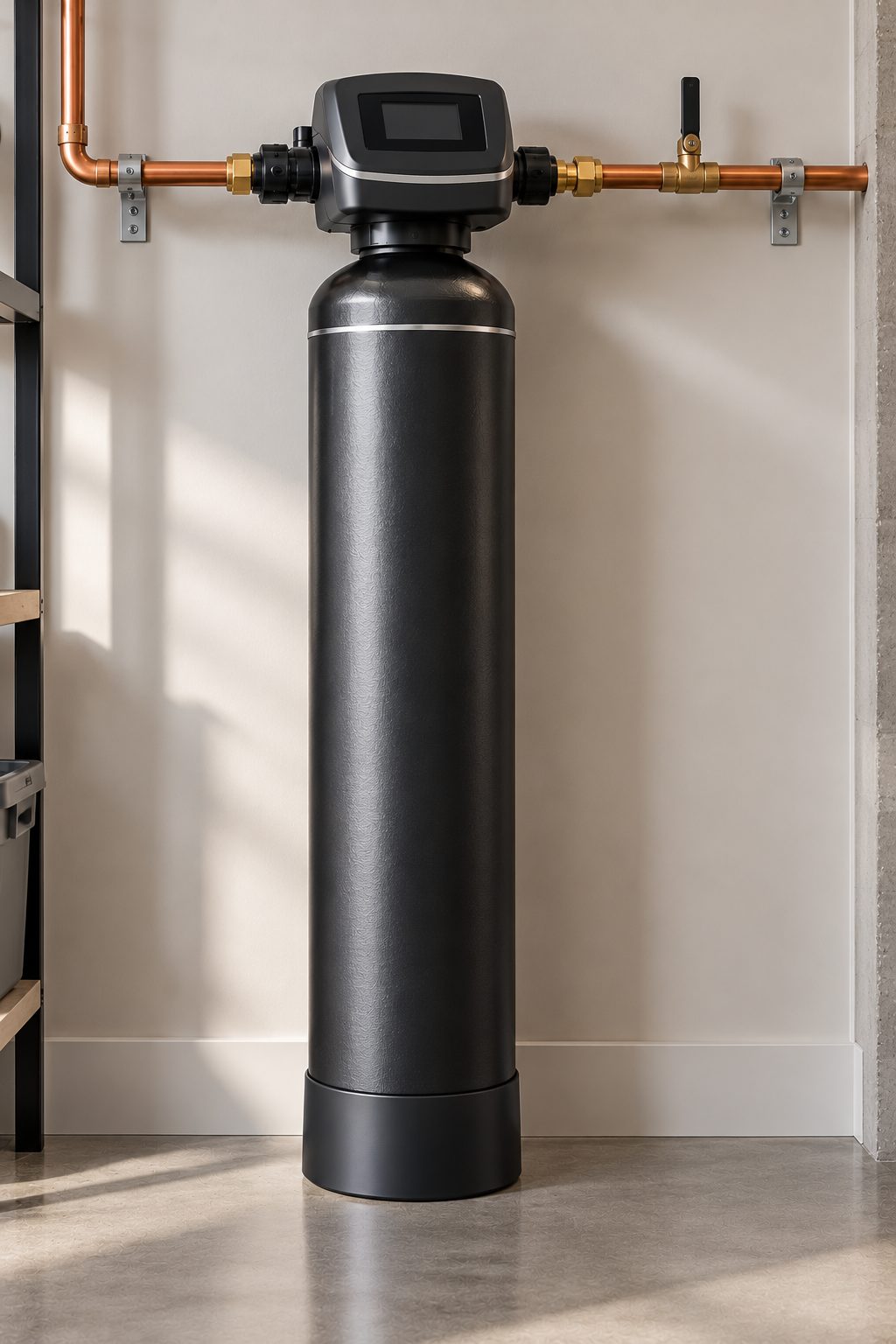
A whole-home carbon filter is a single tank of carbon media with a control valve on top, installed where water enters the home. Everything after it, from the kitchen tap to the shower, gets filtered water.
That makes it a point-of-entry system, unlike a drinking-water filter that treats water at one tap.
How it works
How carbon filtration works.
Water enters the tank
Water from your main supply flows into the whole-home filtration tank.
Through the carbon
It passes slowly through a bed of activated carbon media.
Substances are adsorbed
Targeted substances stick to the carbon’s huge, porous surface.
Treated water to your home
Filtered water continues on to your home’s plumbing.
Over time the carbon fills up and needs replacing or servicing.
What it does
What can carbon filtration reduce?
Any specific claim, such as chloramine, PFAS, lead or VOCs, should be backed by the exact system’s verified performance.
Common applications
- Chlorine-related taste and odour
- Certain organic compounds, where the system is certified for them
- Selected chemical contaminants the specific system is tested for
Not automatically addressed
- Hardness minerals
- All dissolved salts
- All microorganisms
- Every chemical contaminant
- Every PFAS compound
Carbon filtration is not a substitute for disinfection. For hardness, see water softeners.
Chlorine
Understanding chlorine in drinking water.
Municipal water providers add disinfectants such as chlorine or chloramine to protect water from harmful microorganisms on its way to your home. Keeping a small amount of disinfectant in the pipes, called a residual, is part of that protection.
Chlorinated municipal water is not unsafe. Some people simply prefer to reduce the taste or smell at home.
Once the residual is removed, the water after the filter is no longer protected by it. That makes correct system design and regular maintenance more important.
Compare
Whole-home carbon or reverse osmosis?
Different tools for different jobs, and often used together.
| Compare | Whole-home carbon | Reverse osmosis |
|---|---|---|
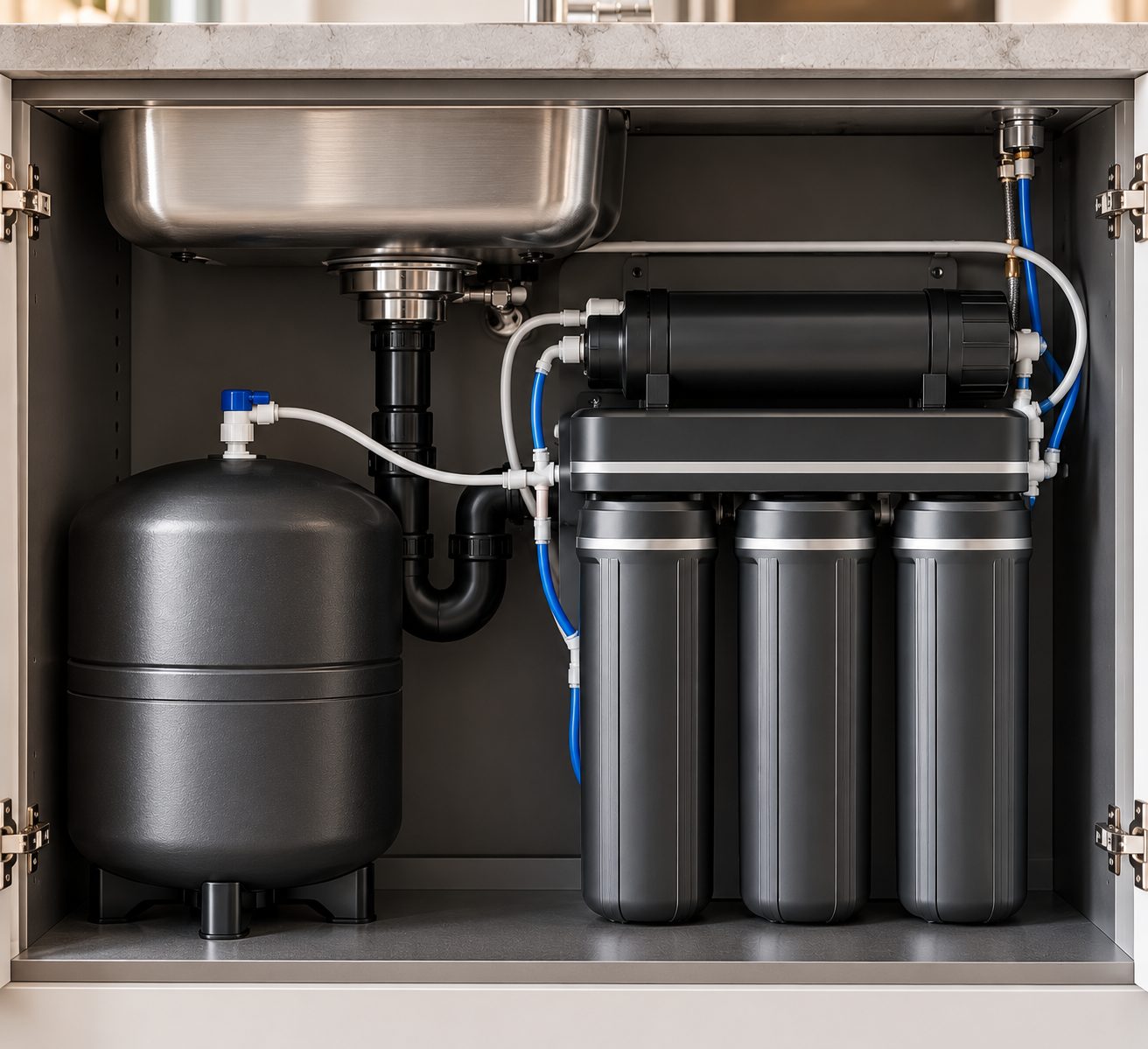
| Installed | Where water enters the home | Under the kitchen sink (or another single location) |
| Treatment technology | Adsorption on activated carbon | Pressure through a semipermeable membrane, plus prefilters |
| Taste and odour | Reduces chlorine-related taste and odour | Also reduces it, through its carbon prefilter |
| Dissolved minerals | Not reduced | Substantially reduced |
| Whole-home or drinking water | All the water in the home | Drinking and cooking water only |
| Maintenance | Media replacement or servicing | Prefilter and membrane replacement |
| Purpose | Better-tasting water at every tap | Filtered drinking water at the kitchen tap |
Choosing
Choosing the right carbon filter.
Municipal or well water
Well water has different concerns and often needs testing first.
Target substances
What exactly you want to reduce decides the media and design.
Household flow
The system must keep up with showers and appliances running at once.
System size
Enough carbon for your water use and the water’s contact time.
Carbon type
Some media, such as catalytic carbon, are designed for chloramine.
Contact time
Water needs enough time in the carbon to be treated well.
Maintenance
How and when the media is serviced or replaced.
Third-party certification
For example, NSF/ANSI 42 covers chlorine taste and odour claims, and NSF/ANSI 53 covers specific health-related contaminants. Check what the exact system is certified for.
Ownership
Maintenance.
Intervals depend on the system and your water, so we set them for your installation rather than quoting a universal schedule.
Media servicing or replacement
Carbon gradually fills up and needs replacing or servicing. When depends on the system, your water and how much you use.
Flow rate
A drop in pressure can be a sign the media or a prefilter needs attention.
Manufacturer recommendations
Follow the maintenance schedule for your specific system.
Sanitary operation
Once chlorine is removed, the water after the filter has less disinfectant, so keeping the system well maintained matters.
Professional inspection
Have it checked when servicing media or if anything changes.
More water solutions
Explore other water solutions
Questions
Frequently asked questions
What does a whole-home carbon filter do?
It passes all the water entering your home through activated carbon, which reduces chlorine-related taste and odour and other substances the specific system is designed and certified for.
Can it improve water taste?
Often, yes, especially when chlorine is what you taste. Results depend on your water and the system.
Can it reduce chlorine odour?
Yes. Appropriate activated carbon media reduces free chlorine, which is a common source of the smell.
Does carbon filtration remove chloramine?
Only systems designed for it, usually with catalytic carbon and enough contact time. Some municipalities use chloramine instead of chlorine, so it is worth checking which yours uses.
Will it soften hard water?
No. Carbon does not reduce hardness minerals. For hard water you need a water softener.
Can it remove lead?
Whole-home carbon systems are generally not certified for lead. Where lead is a concern, a point-of-use filter or reverse osmosis system certified for lead reduction is the usual approach.
Can it remove PFAS?
Only if the specific system is tested and certified for the specific PFAS compounds concerned. Do not assume a carbon filter reduces PFAS.
Does it remove bacteria?
No. Carbon filtration does not disinfect water. Homes on well water with bacteria concerns need a disinfection system, such as UV.
Does it reduce water pressure?
A correctly sized system has little effect on pressure. An undersized or overdue system can reduce it.
How often does the carbon need replacement?
It depends on the system, your water and how much you use. Your installer or the manufacturer will give you the schedule for your system.
Can it be combined with a water softener?
Yes. It is a common pairing, and carbon ahead of the softener can help protect the softener’s resin from chlorine.
Is carbon filtration better than reverse osmosis?
They do different jobs. Carbon improves taste and odour for the whole home, while reverse osmosis filters drinking water more thoroughly at one tap. Many homes use both.
Discover a better water experience throughout your home.
Tell us what you would like to improve about your water, and we’ll help you explore the appropriate treatment options.