
Water Treatment · Water softeners
Less Hard Water. More Everyday Comfort.
Hard water can leave mineral deposits on fixtures, shower glass, and water-using appliances. A properly sized water softener helps reduce the minerals responsible for scale, making everyday cleaning and washing more manageable.
Hard water
Hard water is common. Here’s why it matters.
Hard water contains dissolved calcium and magnesium, minerals that occur naturally in many water supplies. When water evaporates or is heated, they can leave deposits on surfaces and inside equipment.
Hard water is generally not considered unsafe to drink because of its hardness alone. It is mostly about cleaning, comfort and protecting equipment.
White deposits around faucets
Crusty white build-up where water dries.
Spots on shower glass
Cloudy spots that come back soon after cleaning.
Mineral buildup on showerheads
Clogged nozzles and uneven spray.
Soap residue
Soap scum on tubs and tiles, and soap that is slow to lather.
Stiff-feeling laundry
Towels and clothes that feel rough after washing.
Scale in kettles and appliances
Chalky layers inside kettles and other water-using equipment.
Everyday benefits
Discover the difference softer water can make.
Easier bathroom cleaning
Reduced hardness can mean less mineral scale building up on shower doors, faucets and fixtures.
Better soap and detergent performance
Softened water helps soaps and detergents work more effectively, with less interference from hardness minerals.
Softer-feeling laundry
Reducing hardness can mean less mineral residue on fabrics and better detergent performance.
Less scale in water-using equipment
A softener can help limit mineral deposits in compatible water heaters, fixtures and plumbing parts.
A different bathing experience
Some people simply prefer how softened water feels in the shower and bath.
The system
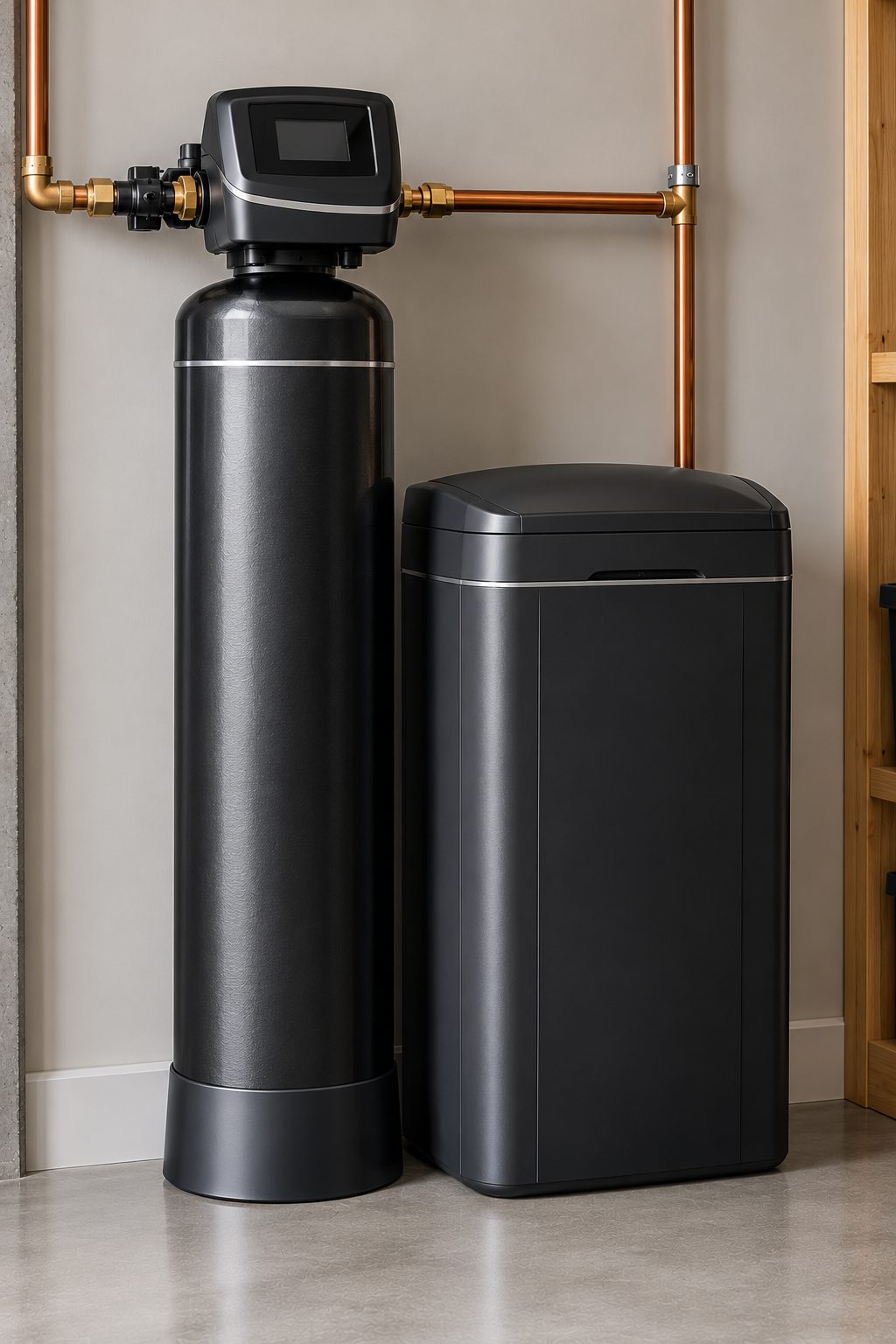
A softener and its brine tank.
A typical softener has two parts. The tall resin tank, with the control valve on top, does the softening. The separate brine tank holds the salt used to recharge the resin.
It is installed where water enters your home, usually near the main shut-off, with a drain and an outlet nearby.
How it works
How does a water softener actually work?
It uses a process called ion exchange.
Hard water enters
Water containing calcium and magnesium flows into the softener’s resin tank.
Mineral exchange
The resin swaps hardness minerals for sodium or potassium ions, depending on the system.
Softened water flows to your home
Water with reduced hardness goes on to your fixtures and appliances.
Automatic regeneration
Every so often, the system rinses the resin with brine from the brine tank to recharge it.
A softener is not a substitute for drinking-water filtration.
What it does
What does a water softener remove?
Designed to reduce
- Calcium hardness
- Magnesium hardness
Not designed to comprehensively remove
- Chlorine
- Bacteria
- Viruses
- All dissolved chemicals
- All drinking-water contaminants
For taste, odour or other drinking-water concerns, look at carbon filtration or reverse osmosis.
Compare
Salt-based softener or salt-free conditioner?
They are different technologies, not interchangeable versions of the same thing.
| Compare | Ion-exchange water softener | Salt-free water conditioner |
|---|---|---|
| How it works | Exchanges hardness minerals for sodium or potassium | Changes how minerals behave so less scale forms |
| Hardness minerals | Removed from the water | Generally stay in the water |
| Salt | Uses salt (or potassium) to regenerate | No salt |
| Feel of the water | Noticeably “soft” | Usually feels much like untreated water |
| Soap and detergents | Lather more easily | Little change in lathering |
| Results | Measurable reduction in hardness | Results vary by technology and water conditions |
Choosing
How we choose the right softener.
Sized to your water and how you use it, never by square footage.
Water hardness
Measured by a water test. Harder water needs more softening capacity.
Household water use
How much water your home uses each day.
Number of occupants
A guide to typical daily use, not a sizing rule on its own.
Peak water flow
Several showers and appliances at once need a valve and tank that can keep up.
Existing plumbing
Pipe size, the main shut-off and where the line can be split.
Installation space
Room for the resin tank, the brine tank, a drain and an outlet.
Regeneration settings
Set to your hardness and use, so it regenerates when needed rather than on a fixed schedule.
Salt and water use
Efficient settings use less salt and less regeneration water.
Ownership
Maintenance and ownership.
Softeners are low-maintenance, but not maintenance-free. What is needed varies by model.
Adding softener salt
Keep the brine tank topped up. How often depends on your hardness, water use and settings.
Checking the brine tank
Look for “bridging”, a hard crust of salt that can stop the softener from regenerating properly.
Periodic inspection
Check that the system is regenerating and that water still tests soft.
Regeneration settings
Update them if your household or water changes.
Cleaning and servicing
Clean the brine tank and have the system serviced as the manufacturer recommends.
More water solutions
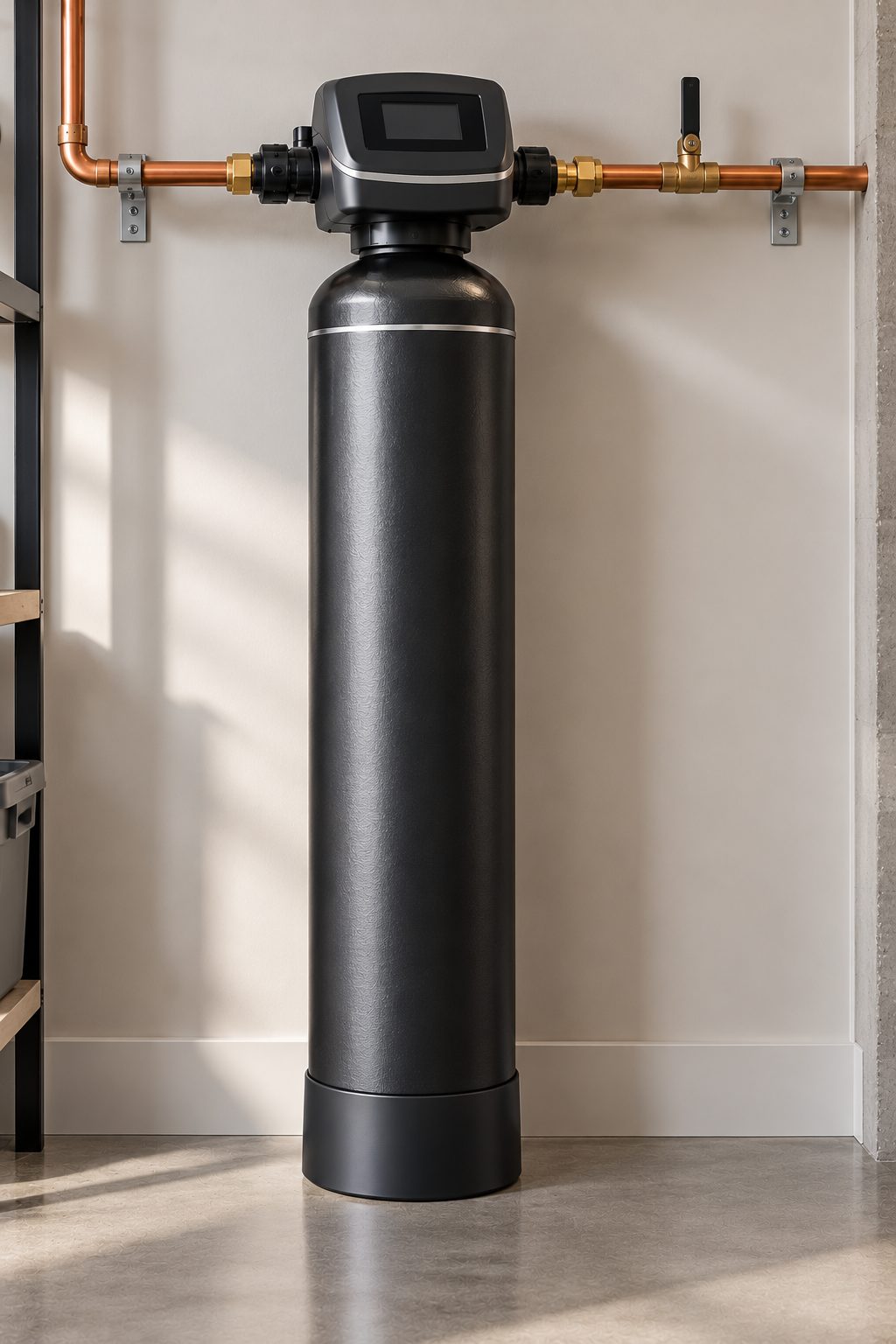
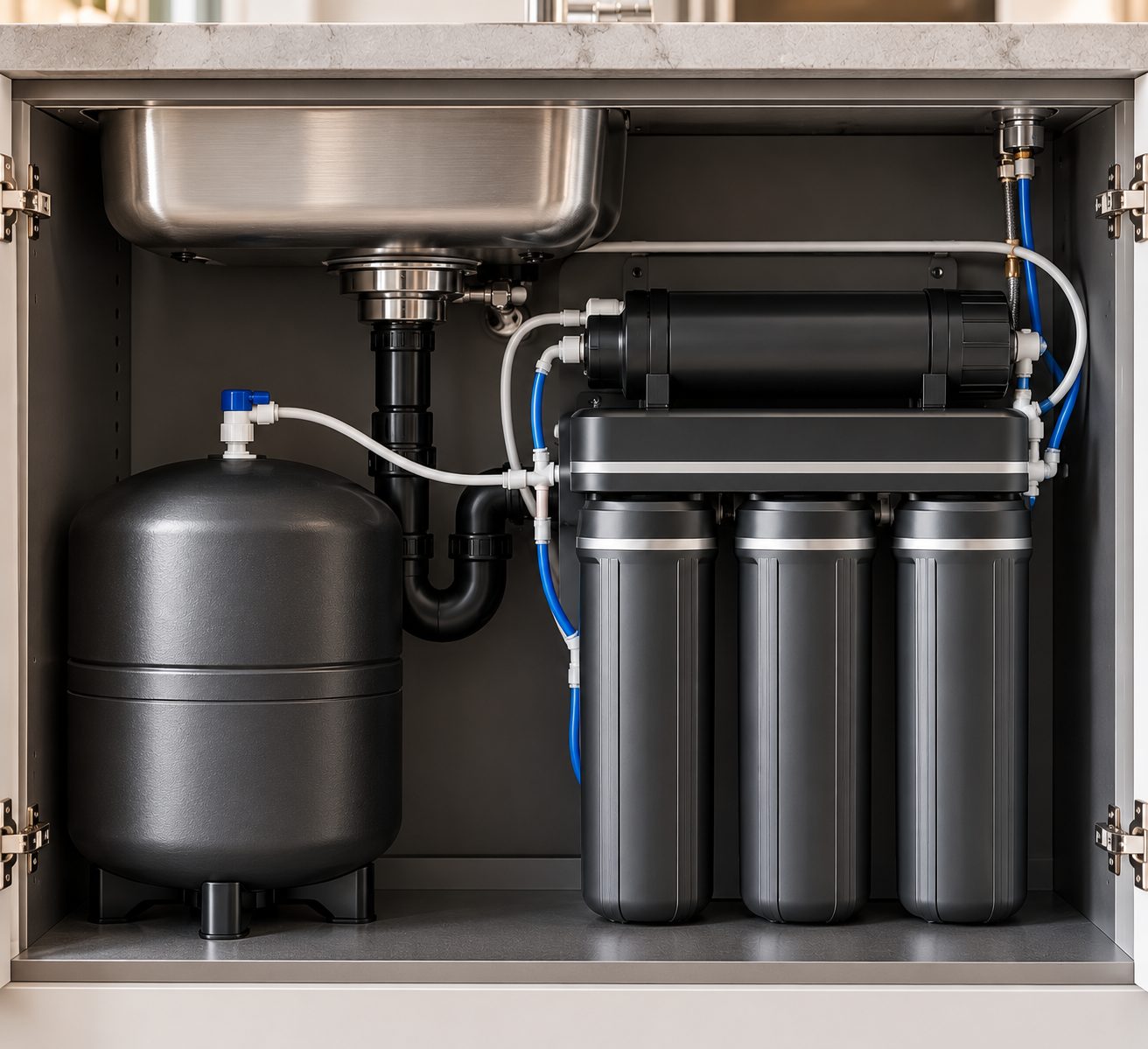
Explore other water solutions
Questions
Frequently asked questions
How can I tell whether I have hard water?
Common signs are white deposits on faucets, spots on shower glass and scale in kettles. A water test gives the actual hardness level, and some municipalities publish theirs.
Is hard water unsafe to drink?
Hardness alone is not considered a health concern. Health Canada has not set a health-based limit for it. It mainly affects cleaning, soap and equipment.
Does a water softener remove chlorine?
No. A softener reduces hardness minerals. For chlorine taste and odour, a carbon filter is the usual choice.
Does softened water feel different?
Many people notice it feels smoother or “slippery”. That is soap rinsing differently in water without hardness minerals.
Can a softener reduce scale on shower glass?
Yes. With less hardness in the water, less mineral scale is left behind, so glass is usually easier to keep clean.
Will softened water help with laundry?
It can help detergents work better and reduce mineral residue on fabrics, which many people notice as softer towels.
Why does a water softener need salt?
Salt makes the brine that recharges the resin, so it can keep removing hardness minerals. Potassium chloride can be used in many systems instead.
How often do I need to add salt?
It depends on your water hardness, how much water you use and the system’s settings. Checking the brine tank monthly is a good habit.
Can I drink softened water?
Yes. Ion-exchange softening adds some sodium, or potassium if you use potassium chloride, and harder water means more is added. If anyone in your household follows a sodium-restricted diet, ask a healthcare provider. Some homes keep an unsoftened cold tap in the kitchen, or add reverse osmosis for drinking water.
Does a water softener require electricity?
Most modern softeners use a small amount of power for the control valve and need an outlet nearby. Some models are non-electric.
How long does a softener last?
Many last 10 to 15 years or more with regular maintenance. Lifespan depends on water conditions and care.
Can I combine a softener with a carbon filter?
Yes, and it is a common pairing: carbon for chlorine taste and odour, the softener for hardness. A carbon filter ahead of the softener can also help protect the resin from chlorine.
Ready for less scale and easier everyday cleaning?
Let’s review your home’s water conditions and help you explore the right softening solution.