
Indoor Air Quality · Dehumidifiers
Less Excess Moisture. More Comfortable Living.
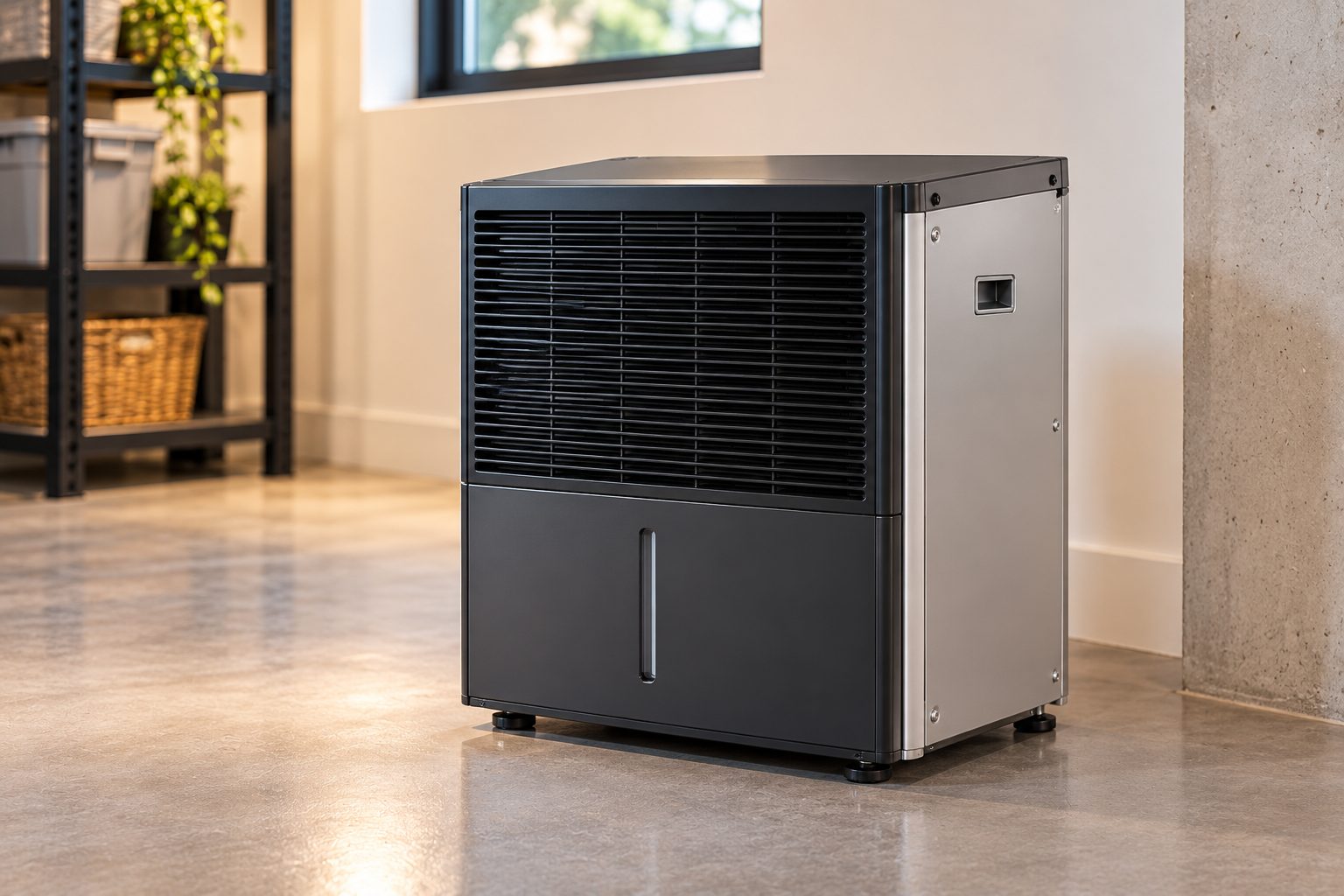
A whole-home dehumidifier removes excess moisture automatically, helping damp basements and humid homes feel more comfortable.
Signs
Is moisture a problem in your home?
Condensation
Water on cold pipes, windows or walls in warm weather.
Musty odours
A damp, stale smell, often in the basement.
Damp basements
Basements stay cool, so moisture tends to settle there.
High relative humidity
Readings that stay well above 50–60% for long periods.
Moisture intrusion
Water entering through foundations, windows or plumbing leaks.
Leaks and water intrusion need repairing at the source. A dehumidifier cannot remediate mould that is already there.
Benefits
Why homeowners add a dehumidifier.
Humidity control
Holds humidity at the level you set, automatically.
Comfort in damp conditions
Less clammy, sticky air, especially in basements and humid summers.
Supports moisture management
Helps limit the conditions that lead to musty odours and condensation.
Automatic operation
Drains continuously, with no buckets to empty.
How it works
Refrigeration-based moisture removal.
Damp air is drawn in
A fan pulls humid air into the unit.
Moisture condenses
Air passes over a cold coil, and water vapour condenses into liquid.
Water drains away
Collected water runs to a floor drain or a condensate pump.
Drier air returns
The air is rewarmed slightly and sent back, drier, into the home.
Compare
Whole-home or portable?
| Compare | Whole-home | Portable |
|---|---|---|
| Capacity | Higher; sized for a basement or the whole home | Smaller; one room or area |
| Installation | Permanently installed, often ducted | Plug in and place |
| Drainage | Continuous drain or condensate pump | Bucket to empty, unless connected to a drain |
| Noise and space | Can be tucked in a mechanical area | Sits in the room it serves |
| Control | Set-and-forget humidity control | Basic built-in controls |
| Upfront cost | Higher | Lower |
Choosing
What we look at.
Moisture load
How much water needs removing, based on the space, climate and sources.
Home layout
Open basements suit one unit; closed-off areas may need ducting.
Drainage
A floor drain nearby, or a condensate pump.
Ducting
Optional ducting to reach more of the home.
Electrical supply
A suitable outlet or circuit for the unit.
Humidity controls
A control that holds your chosen level.
More air quality solutions
Explore other air quality solutions
Questions
Frequently asked questions
How does a dehumidifier work?
A fan draws damp air over a cold coil, where moisture condenses into water and drains away. The drier air is rewarmed slightly and returned to the home.
Portable or whole-home?
Portables suit a single room or a small, occasional problem. A whole-home unit handles more moisture, drains continuously and runs automatically, so it suits persistently damp basements or homes.
What humidity should I aim for?
Around 50% or a little lower in damp seasons is a common target, and roughly 30–50% overall. We help set it for your home.
Will it fix my damp basement?
It can control the humidity in the air. Water coming in through the foundation, grading, gutters or leaks needs to be fixed at the source.
Will it get rid of mould?
No. A dehumidifier can help create conditions that discourage mould growth, but it cannot remove mould that is already there. Existing mould needs cleaning or remediation, and its cause fixed.
How is the water drained?
To a floor drain by gravity, or with a condensate pump where there is no drain nearby.
Does it work with my HVAC system?
Some whole-home units connect to your ductwork to reach more of the home; others stand alone in the basement. We check what suits your layout.
What maintenance does it need?
Cleaning or replacing the filter, keeping the drain clear, and checking the coil as the manufacturer recommends.
What causes high humidity?
Humid summer air, basements, cooking, showers, drying laundry indoors, and water intrusion are common causes.
When should I install one?
When humidity stays high despite fixing leaks and ventilating, or when musty odours and condensation keep coming back. Summer is when the problem usually shows up.
Ready to take control of damp air?
Tell us what you’re noticing at home, and we’ll help you explore the solutions that fit.