
Indoor Air Quality · Humidifiers
Comfortable Air Through the Heating Season.
A whole-home humidifier adds controlled moisture through a compatible heating system, helping your home feel more comfortable when winter air turns dry.
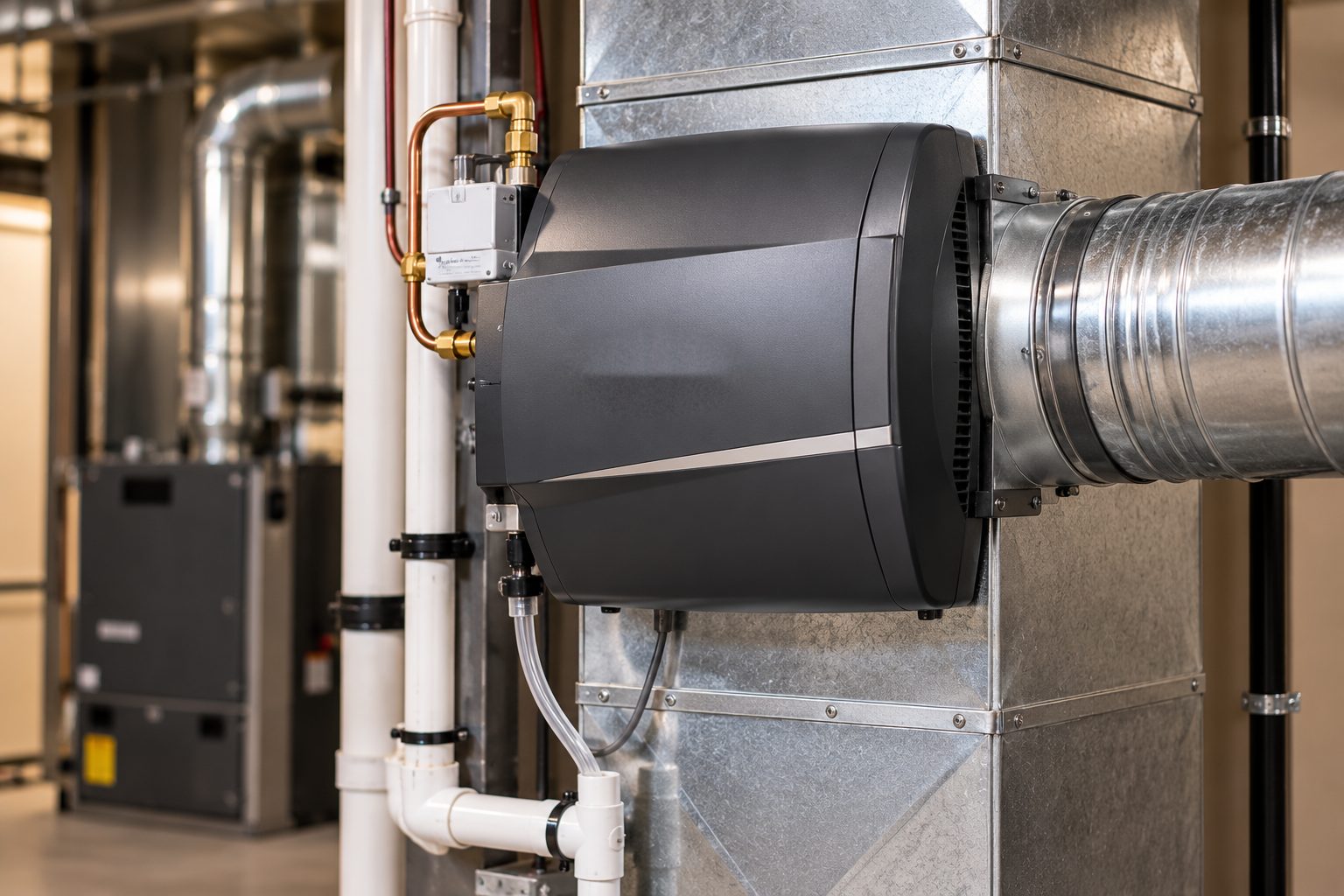
What it does
Moisture where winter air needs it.
Cold winter air holds little moisture. Once it is heated indoors, relative humidity can drop low enough to feel uncomfortable.
A whole-home humidifier connects to your ductwork and a water line, and adds moisture to the air your heating system already circulates, controlled automatically by a humidistat.
Benefits
Why homeowners add a humidifier.
Improved comfort in dry weather
Helps with the dry-feeling air, static shocks and parched indoor conditions common in Canadian winters.
Centralized humidity control
One system adds moisture to the air going to every room, instead of portable units in each room.
Convenient automatic operation
A humidistat runs it for you, with no tanks to fill.
Appropriate winter moisture management
Automatic controls can lower the target as it gets colder, to help avoid condensation.
How it works
How a whole-home humidifier works.
Humidistat calls for moisture
When indoor humidity drops below your setting, the humidifier switches on.
Water is supplied
A small water line feeds the humidifier through a valve.
Moisture is added to the air
Air passes over a wetted panel, or steam is injected into the ductwork.
Air carries it through the home
The furnace fan distributes the humidified air to every room.
Types
Bypass, fan-powered or steam?
| Compare | Bypass | Fan-powered | Steam |
|---|---|---|---|
| How it works | Furnace air passes through a wetted panel, through a small bypass duct | A built-in fan pushes air through a wetted panel | Heats water to make steam, injected into the duct |
| Output | Moderate | Higher than bypass | Highest and most precise |
| Depends on furnace heat | Yes; works best with warm supply air | Yes | No; makes its own steam |
| Good fit | Typical furnace homes | Larger homes, or where a bypass duct will not fit | Larger needs, precise control, and heat pumps or lower-temperature systems |
| Electricity | Very little | A little, for the fan | More; usually needs a dedicated circuit |
| Water use | Some water drains away during operation | Some water drains away during operation | Drains periodically to flush minerals |
| Maintenance | Replace the water panel; clean the drain | Replace the water panel; clean the drain | Replace or clean the steam canister, depending on water hardness |
Choosing
What we look at.
Avoiding winter condensation matters as much as adding moisture.
Home size and tightness
Larger or leakier homes need more moisture to reach the same humidity.
Furnace compatibility
Bypass and fan-powered units need a forced-air system with suitable warm air; heat pumps often suit steam.
Water supply
A nearby cold- or hot-water line for the feed.
Drainage
Evaporative units need a drain or condensate pump; steam units also drain.
Humidistat
An automatic, outdoor-temperature-compensating control is the safest choice in cold climates.
Condensation risk
Window performance and very cold weather limit how much humidity a home can hold safely.
Maintenance
Panels or canisters need regular attention to keep working cleanly.
More air quality solutions
Explore other air quality solutions
Questions
Frequently asked questions
What does a whole-home humidifier do?
It adds controlled moisture to the air moving through your heating system, so the whole home is less dry in winter.
How is it different from a portable unit?
It is installed on your ductwork, connected to a water line, and run by a humidistat, so there are no tanks to fill and it treats the whole home rather than one room.
What is the ideal winter humidity?
Around 30–50% is a general reference, but in very cold weather many Canadian homes need to run lower to avoid condensation on windows. An automatic humidistat adjusts for this.
Can excess humidity cause damage?
Yes. Too much moisture can condense on cold windows and walls and contribute to mould and damage. That is why the setting matters, especially in cold snaps.
Does it work with my furnace?
Most forced-air furnaces can take a bypass or fan-powered humidifier. Heat pumps and low-temperature systems are often better suited to a steam humidifier. We check this during the consultation.
What maintenance does it need?
Evaporative units need the water panel replaced, often once a heating season per the manufacturer, and the drain kept clear. Steam units need the canister serviced, more often with hard water.
How much water does it use?
It varies with the type, the setting and how dry it is. Evaporative models send some water to the drain as well as into the air.
Why do my windows get condensation?
Warm, moist air meets cold glass. If it happens often, the humidity is probably set too high for the outdoor temperature, or the windows are losing a lot of heat.
What is a steam humidifier?
A humidifier that boils water to make steam and injects it into the ductwork. It does not rely on furnace heat, so it suits heat pumps and offers more output and precise control.
How do I know if I need one?
Common signs are static shocks, dry-feeling air and low humidity readings through the winter. An inexpensive hygrometer is a good first check.
Ready for more comfortable winter air?
Tell us what you’re noticing at home, and we’ll help you explore the solutions that fit.