
Indoor Air Quality · UV treatment
Targeted UV Technology for Your HVAC System.
UV-C lamps installed inside your heating and cooling system can limit microbial growth on the surfaces they illuminate, such as the cooling coil.
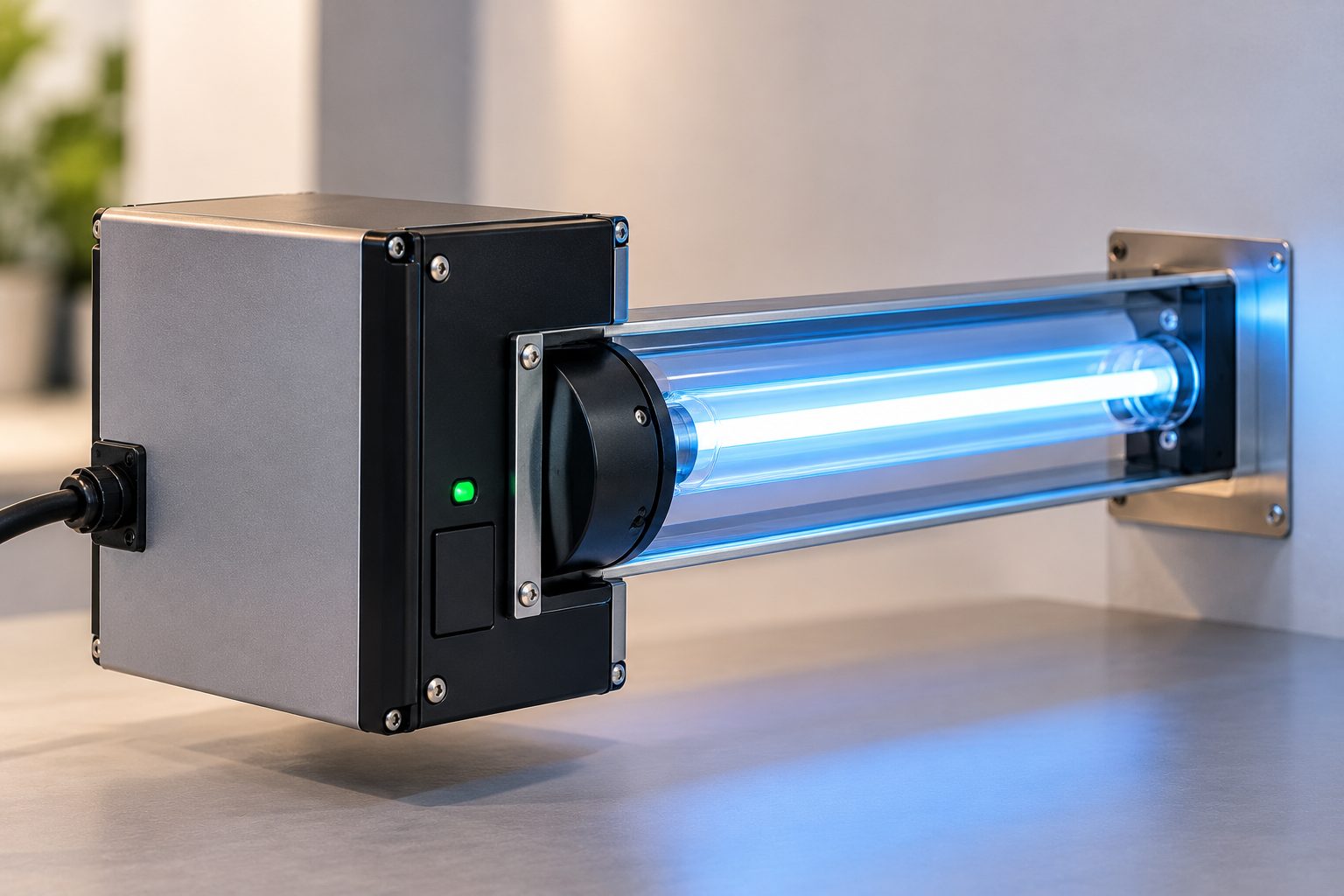
How it works
Germicidal UV, in the right place.
UV-C light can damage the genetic material of bacteria, mould and other microorganisms, limiting their ability to grow. This is called ultraviolet germicidal irradiation.
How well it works depends on the UV dose, which combines lamp strength and exposure time, along with placement and equipment design. Surfaces lit continuously receive far more UV than air rushing past.
Compare
Coil and surface treatment, or in-duct air treatment?
| Compare | Coil / surface treatment | In-duct air treatment |
|---|---|---|
| What it treats | Surfaces it shines on continuously, such as the cooling coil and drain pan | Air passing the lamp |
| Exposure time | Constant, so surfaces receive a large UV dose | Brief, as air moves past quickly |
| What decides results | Lamp placement, distance and output | Lamp power, the treated length and airflow speed; needs validated design |
| Typical aim | Limit microbial growth on the coil and nearby surfaces | Reduce some airborne microbes, depending on design |
What it can do
Potential benefits, and the limits.
Potential benefits
- Targeted control of microbial growth on illuminated HVAC surfaces, such as the coil and drain pan
- Certain air treatment applications, where the design is validated
Does not
- Replace ventilation
- Replace particle filtration
- Remove dust, odours or gases
- Guarantee illness prevention
Safety
Safety, ozone and maintenance.
Eyes and skin
UV-C can injure eyes and skin. Lamps must be fully enclosed, and never looked at directly.
Proper enclosure
Installed inside the system, with access panels that keep the lamp out of sight. Some systems use a switch that turns the lamp off when a panel is opened.
Ozone
Choose lamps designed not to produce ozone. Ozone is a lung irritant, and ozone-producing devices are not recommended for occupied homes.
Nearby materials
UV can degrade some plastics and wiring over time, so placement and shielding matter.
Maintenance
Lamp output drops with age, so lamps are replaced on the manufacturer’s schedule. Lamps contain mercury and need proper disposal.
More air quality solutions
Explore other air quality solutions
Questions
Frequently asked questions
What is UV-C?
Short-wavelength ultraviolet light that can damage the genetic material of microorganisms. Its effect depends on the dose: how strong the light is and how long something is exposed.
How is it used in HVAC systems?
Mostly to shine continuously on the cooling coil and drain pan, where damp conditions can support microbial growth. Some systems also aim to treat air passing through the ducts.
How is it different from filtration?
Filters capture particles. UV does not capture or remove anything; it treats microorganisms it can reach with enough light. They do different jobs and are often used together.
What is coil treatment?
A UV lamp placed to shine on the cooling coil and drain pan continuously, limiting microbial growth on those surfaces.
Does it kill airborne microbes?
In-duct treatment can reduce some airborne microbes, but air moves past the lamp quickly, so results depend heavily on the system’s design and validation. It does not guarantee illness prevention.
Does UV reduce dust?
No. UV has no effect on dust or other particles. That is filtration’s job.
Is it safe?
When properly installed inside the system and enclosed, yes. Direct exposure to UV-C can harm eyes and skin, so lamps must never be viewed directly or operated with panels open.
Does it produce ozone?
Some lamps can. We recommend lamps designed not to produce ozone.
What maintenance is needed?
Lamps are replaced on the manufacturer’s schedule, because output fades even while they still glow, and kept clean. Used lamps need proper disposal.
Can it be combined with filtration?
Yes, and it often is. Filtration captures particles, and UV treats illuminated surfaces in the system.
Curious whether UV suits your system?
Tell us what you’re noticing at home, and we’ll help you explore the solutions that fit.